



Author: Laura Bruzzese
Key Points on the Energy Retrofit of Historic Buildings
- The energy retrofit of historically protected buildings requires a balance between improvement in performance and protection of historic property.
- The selection of measures must take into account both the energy regulations and the principles of restoration as set forth in the Legislative Decree 42/2004.
- The analysis involves the entire building-systems complex through surveys, historical documentation and assessment of consumption.
- Energy-efficiency measures energy efficiency for historic buildings must be evaluated by considering risks, benefits, and their mutual interactions.
- Solutions such as thermal insulation plasters, high-performance windows and doors and targeted improvements can improveenergy efficiency in historic buildings while preserving their architectural value.
In recent decades, the energy regulations has taken on an increasingly central role in the construction, through theenactment of numerous measures at both the European and national. In Italy, the higher energy consumption come from the residential sector and, in particular, from air conditioning of buildings in both winter and summer.
Table of Contents
- What is meant by energy efficiency improvements in historic buildings?
- Evaluation Criteria for the Energy Retrofit of Historic Buildings
- The Assessment Phase in the Energy Retrofit of a Historic Building
- How to Evaluate Energy Efficiency Measures in Historic Buildings
- Exterior Insulation: Advantages and Limitations in Historic Buildings
- Energy Retrofits of Historic Buildings Through Interior Insulation
- Thermal-insulating plasters: a suitable solution for historically protected buildings
- Windows and Glass Surfaces to Improve the Energy Efficiency of Historic Buildings
- Energy Retrofits for Historic Buildings: The Fundamental Role of Design
What is meant by energy efficiency in historic buildings?
Theenergy efficiency of the historic buildings includes measures aimed at reduce consumption and improve interior comfort, while preserving the architectural and material characteristics and cultural of thereal estate. The solutions must therefore be compatible with the protection and the storage of the good.
Improving the energy efficiency of historic buildings, and specifically their insulation, has always been considered a challenging and often controversial issue, due to the difficulty of balancing the need to improve the performanceof the building envelope with the equally important need to preserve properties characterized by significant historical and cultural heritage value.
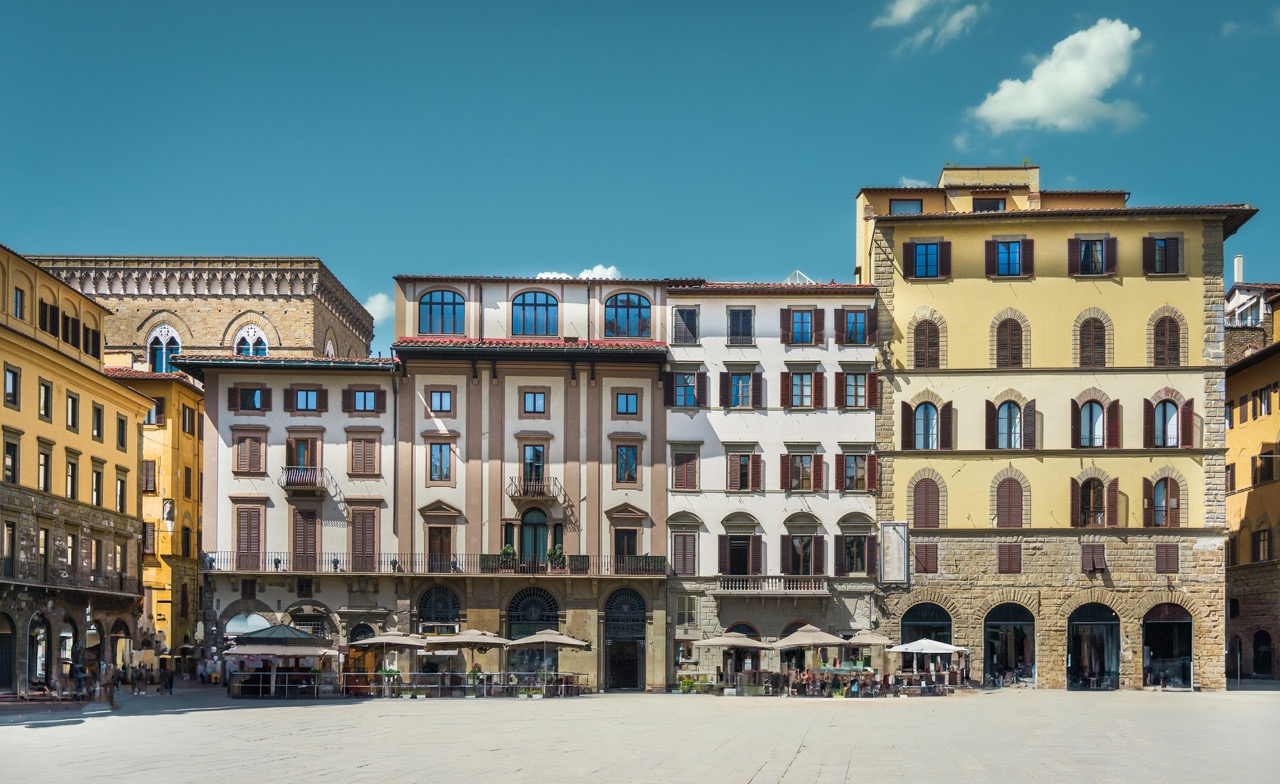
Evaluation Criteria for the Energy-Efficiency Retrofit of Historic Buildings
The identification of the scenario by speech The most appropriate course of action must be determined by considering, on the one hand, the performance levels as required by the current regulations regarding containment of the energy consumption and, on the other hand, the issues specific to the discipline of the restoration which, as provided for in the Legislative Decree 42/2004, must ensure the protection of the cultural property that is the subject of the intervention.
To this end, it is important to emphasize that this assessment must take into account not only the scale of the building but also that of the context in which the cultural property is situated and derives its significance.
The methodological approach is no different from that adopted in the field of restoration and consists of two main phases: a fact-finding phase and an evaluation phase for energy efficiency measures.
The Assessment Phase in the Energy Retrofit of a Historic Building
The phase of familiarization phase pertains to both the context and the building in question analysis. It must cover the entire building-system and must be carried out through:
- theanalysis of documentary and archival sources;
- Bibliographic Sources;
- direct observations through photographic, morphological, material, and exposure surveys.
Thevisual inspection of the system building-facility and theanalysis of the consumption are essential for understanding the quantity and the profile by energy use, providing a useful element by comparison with the average values by reference and making it possible to identify potential presentations by energy conservation to low investment, which can be achieved primarily through internal procedures for management and maintenance and with a corresponding estimate of the potential savings that could be achieved.
How to Evaluate Energy Efficiency Measures in Historic Buildings
The evaluation of energy efficiency for listed buildings, which may apply to the entire building or only to a part of it, is conducted by considering the impact that these measures have on the building in terms of risks or benefits.
The evaluation of energy efficiency in listed buildings is based on an ordinal scale based on various criteria for evaluation, depending on the various objectives identified by the checklist contained in the standard.
In the impact analysis it is not it is possible to a simple sum of the effects of the various measures; rather, one must consider the interrelationships between the interventions through an iterative process. If the results are not satisfactory, both the measures identified as well as the objectives, in order to strike a balance between the needs for energy efficiency and preservation the historic building.
Exterior Insulation: Advantages and Limitations in Historic Buildings
Among the possible traditional technical solutions for energy retrofitting for historically protected buildings,exterior insulation significantly improves thermal performance of the walls by installing a continuous layer of insulation on the exterior facade, enabling the achievement of transmittance values that comply with current regulations.
However, this project involves alternating facades, incorporating any architectural elements of distinctive character such as string courses and full-height rusticated pilasters, which characterize the facade. For this reason, this solution is generally unsuitable when listed buildings.
Energy Retrofits of Historic Buildings Through Interior Insulation
Alternatively,interior insulation, which reduces thermal transmittance of the walls through materials with low thermal conductivity. Compared to exterior insulation, however, this solution has critical issues related to risk of interstitial condensation and the formation of thermal bridges between walls and floors.
In fact, this would create points where the thermal transmittance gradient would be high, posing a risk of concentration of heat loss. In addition, the possible implementation of Interior stud walls entails a reduction of interior spaces of listed buildings and may interfere with decorated surfaces or historic furnishings, which would be altered or concealed.
Thermal-insulating plasters: a suitable solution for historically protected buildings
A solution that is more compatible with the historic building stock is the use of exterior thermal insulation plaster. The project involves the application of a layer of plaster made from materials such as foam glass, applied over a substrate primer.
First, it is necessary to conduct a diagnostic phase aimed at color sampling of the existing surface, in order to reproduce the same color during the painting .
These materials, thanks to the use of fibrous insulation, organic and inorganic, as well as natural calcareous materials, exhibit thermo-hygrometric characteristics are comparable to those of traditional vertical masonry, and are therefore compatible with them. Furthermore, the installation technique similar to that traditional, making this particular finishing layer particularly suitable for restoration projects of historic buildings.
Windows and Glazed Surfaces to Improve the Energy Efficiency of Historic Buildings
In order to further increase theenergy efficiency in thehistoric building, it is also possible to make changes to the glass surfaces, by evaluating the application of low-emissivity films insulation materials on the side interior of the glass surfaces, capable of improving both the solar control both thethermal insulation.
Alternatively, one can consider replacement of the existing windows and doors with new windows and doors with high energy efficiency, which match the original design of the building. The solution may include, for example, wooden frames with thermal transmittance of 1.0 W/m²K and double-pane glass with a transmittance of 1.3 W/m²K.
Energy Retrofits of Historic Buildings: The Fundamental Role of Design
The energy retrofit of the listed buildings Therefore, it requires a integrated approach and multidisciplinary, in which the design choices not can be standardized but they must be based on a careful analysis of individual cases.
In this context, the role of design takes on central importance: only through an in-depth investigative process and a critical evaluation of possible alternatives is it possible to identify interventions that are effective, sustainable, and respectful of the property’s historical and architectural value, thereby contributing to the enhancement and long-term durability of the buildings.
If you are considering an energy retrofit of historically protected buildings, please contact the team at Enertech Solution to discuss your specific situation in detail and identify the most suitable design solution.