



Author: Federico Re Ferrè
Key Points
- Indoor indoor pollutants can be of chemical, physical or biological and compromise indoor air quality.
- Radon, particulate matter, VOCs, formaldehyde, CO, NO₂ and molds present their origins and risks different.
- The CO₂ is not a true pollutant at ordinary concentrations, but it serves as an useful useful of air air.
- The reduction of sources must precede ventilation ventilation and filtration.
- The indoor air quality must be taken into account in design of buildings and systems.
Air quality is a sensitive issue and is often the focus of regulatory updates. In fact, indoor pollutants can pose a risk to human health if they are not monitored and controlled. In this article, we will examine the main types of pollutants, their sources, the associated risks, and the key strategies for reducing their presence in indoor environments.
What Are Indoor Pollutants?
The term “indoor environment” refers to enclosed spaces where people live or carry out their activities, such as homes, offices, schools, healthcare facilities, and workplaces. Indoor pollution is linked to the presence or accumulation of substances and agents that can affect indoor air quality. Indoor air quality (IAQ) depends on the sources present, the activities carried out in these spaces, and the ability to ensure adequate air exchange.
Indoor pollutants can be chemical, physical, or biological in nature. The pollutants analyzed below include radon, particulate matter, volatile organic compounds, formaldehyde, carbon monoxide, nitrogen dioxide, mold, and CO2.
The Main Indoor Pollutants
Radon
Let’s start with what is probably the most dangerous pollutant of all: radon. Radon is a naturally occurring radioactive gas that comes from the ground and can accumulate indoors without occupants noticing, as it is odorless and colorless. It is considered the second leading cause of lung cancer worldwide after smoking.
The soil is the main source of radon emissions, accounting for 61 percent, compared to 20 percent from building materials, 17 percent from outdoor air, and just 2 percent from water. For this reason, radon barriers are very often installed to prevent radon from rising from the subsoil and entering buildings.
Particulate Matter
Particulate matter (abbreviated as PM), on the other hand, is the leading cause of diseases in the population, which can be either cardiovascular or respiratory. However, there is a substantial difference compared to radon and other indoor pollutants: since it is widespread everywhere and originates, above all, from outdoor air, it is not strictly an indoor pollutant and therefore cannot be classified solely within the category of indoor pollutants.
The most dangerous is PM2.5, which, with a diameter of less than 2.5 micrometers, can reach the pulmonary alveoli. Particulate matter originates from both human activities (motor vehicles, heating from stoves and boilers, intensive livestock farming, construction sites, etc.) and natural (soil erosion, pollen dispersal, etc.), and one way to reduce it in indoor environments is to use filters in mechanical ventilation systems.
VOCs and formaldehyde
Let’s now turn to another category of pollutants: VOCs, or volatile organic compounds. These compounds are volatile at room temperature, and typical sources include paints, solvents, adhesives, particleboard, and cleaning products. New homes release higher levels of VOCs because they often contain new painted furniture, laminated products, treated wood, and similar materials. VOCs can cause irritation and chronic health conditions, as well as increase the risk of cancer.
Among all VOCs, formaldehyde is usually mentioned separately because it is classified as a known carcinogen, and a maximum concentration of 0.1 mg/m³ (30-minute average) is established for it. Formaldehyde comes mainly from MDF furniture, particleboard, laminated panels, glues, and paints; therefore, it is very common in new buildings, those that have just been renovated, or those furnished with mid- to low-end furniture.
Carbon monoxide
After discussing a pollutant found mainly in new buildings, let’s move on to a pollutant found in buildings with old and malfunctioning systems: carbon monoxide (CO). It is certainly the deadliest of all, as it can kill within a few hours, but fortunately, it is also one of the easiest to control.
Carbon monoxide is produced as a result of incomplete combustion, during which hydrocarbons are not completely oxidized to form CO₂ but only CO. When inhaled, it binds to iron in the blood, thereby preventing the transport of oxygen (the bond between carbon monoxide and the iron ion in hemoglobin is much more stable than that between the iron ion and oxygen). The few recorded cases of death are due to CO emissions from old stoves and furnaces, usually in very old homes or those that have been poorly maintained.
Nitrogen dioxide
Another pollutant associated with combustion processes is NO₂, which can come from heating systems, nearby traffic, or industrial sites with incinerators and chemical processes.
Nitrogen dioxide is produced by high-temperature combustion processes that occur in boilers, stoves, diesel engines, and similar devices, where molecular nitrogen (N₂) reacts with oxygen (O₂). It is a pollutant that irritates the respiratory tract and is particularly harmful to people with asthma.
Molds
Another pollutant that can cause respiratory problems is mold: it grows in buildings with moisture issues and can cause asthma, allergic rhinitis, and similar conditions. Some molds, such as Aspergillus, can be very dangerous, especially for people with weakened immune systems. Molds are classified as indoor biological pollutants, along with other agents such as spores, pollen, mites, and microorganisms.
CO2 and Indoor Air Quality
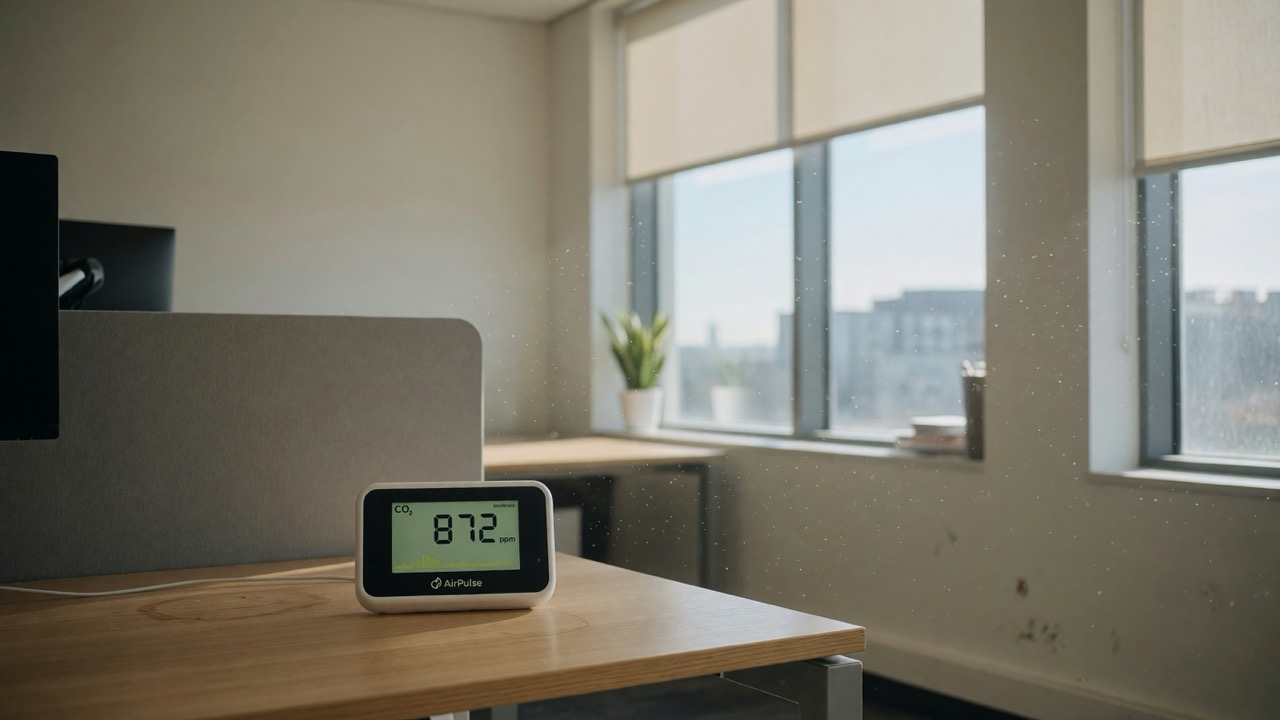
Finally, let’s look at CO2. It is not actually a true pollutant; it is not toxic except at very high concentrations, and it does not result from inefficient combustion (like carbon monoxide). On the contrary, it is the desired product of oxidation resulting from complete combustion. It comes mainly from people, and a concentration exceeding 1,000–1,500 ppm causes problems such as drowsiness and reduced attention span, as well as other cognitive symptoms. The concentration in outdoor air is about 420 ppm, so a level of 1,500 ppm would mean breathing CO₂ at a concentration nearly four times that of outdoor air. Symptoms become even more pronounced above 2,000 ppm, at which point nausea and headaches may occur.
CO2 becomes very dangerous at levels above 5,000 ppm and can be lethal. CO2 can be considered an excellent indicator of air quality: if the air is stale and has high CO2 levels, it is likely that other pollutants have also increased in the meantime because the room has not been adequately ventilated.
How to Reduce Indoor Pollutants
The main sources of indoor pollution include building materials and furnishings, cleaning products, combustion appliances, smoke, humidity, and the presence of occupants.
To ensure good air quality, before addressing the topic of mechanical ventilation in all its forms, one must always begin by analyzing the pollutants and identifying their sources in order to eliminate or reduce them.
After ensuring that sources of pollutants have been minimized, we can move on to considering ventilation and air filtration systems—which, however, are the next steps. In this regard, the quote often attributed to Max sums it up best: “If there is a pile of manure in a space, do not try to remove the odor by ventilation. Remove the pile of manure.”
Indoor Pollutants, Risks, and Control Strategies
| Pollutant | Risk | Source | Strategy to reduce emissions (source control) |
| Radon | Lung Cancer | Primarily from the ground | Sealing potential entry points, installing anti-radon barriers, ventilating the crawl space |
| Particulate Matter | Cardiovascular and respiratory | Outdoors: mainly intensive livestock farming and traffic Indoors: cigarette smoke |
Ban on smoking indoors; elimination of candles and incense |
| Formaldehyde | Cancers | Furniture and furnishings made of particleboard with resins and adhesives, wood panels, household products | Choose certified products and water-based paints |
| VOCs | Cancers and neurological diseases | Building materials, furnishings, and cleaning products | Choose certified products and water-based paints |
| CO | Death | Incomplete Combustion from Stoves and Fireplaces | Perform regular boiler maintenance and replace the boiler if it is very old. Avoid using very old stoves. |
| NO2 | Inflammation of the respiratory tract | Traffic (diesel engines), heating (boilers), industry (various combustion processes) | Regular boiler maintenance for indoor sources |
| Molds | Respiratory diseases | High humidity and poor air circulation | Correction of thermal bridges and humidity control |
| CO2 | Cognitive | People | Adequate ventilation and crowd control |
Indoor Air Quality and Building Design
Indoor air quality is not a minor issue: it is essential to people’s health, well-being, and productivity. Each of the pollutants analyzed has a specific source and requires a targeted response. The starting point is always to identify and reduce the sources; only then does it make sense to consider ventilation and filtration. Designing a building or facility without considering the quality of the air breathed inside it means optimizing the building envelope while neglecting the people who live there.
Frequently Asked Questions About Indoor Pollutants
What is meant by indoor pollution?
Indoor pollution refers to the presence or accumulation, in enclosed spaces, of substances and agents that can compromise air quality and affect the health and well-being of occupants.
What are the main indoor pollutants?
The main indoor pollutants include radon, particulate matter, VOCs, formaldehyde, carbon monoxide, nitrogen dioxide, and mold. CO₂ is not a true pollutant at normal concentrations, but it is a useful indicator of air exchange.
What are the main sources of indoor pollution?
The main sources include building materials, furniture and furnishings, paints, adhesives, cleaning products, combustion appliances, smoke, humidity, and the presence of occupants.
What is the main cause of poor indoor air quality?
There is no single cause. Poor air quality often results from a combination of indoor pollution sources and insufficient air exchange.
What is an indoor biological pollutant?
Mold is an example of a biological indoor pollutant. Spores, pollen, dust mites, and microorganisms also fall into this category.
Is indoor air really more polluted than outdoor air?
Often, yes. The WHO estimates that concentrations of many pollutants indoors can be 2 to 5 times higher than outdoors, and in some cases even higher. This happens because enclosed spaces—especially modern, tightly sealed buildings—trap emissions from materials, furnishings, and human activities without sufficient air exchange.
Is opening the windows enough to ensure good indoor air quality?
Opening windows is helpful but not always sufficient, and in certain situations it can be counterproductive. Natural ventilation depends on uncontrollable variables (wind, temperature, building layout) and does not guarantee consistent airflow rates. During peak urban traffic hours, it can actually introduce high concentrations of PM₂.₅ and NO₂ from outside. The correct design solution for low-infiltration buildings is controlled mechanical ventilation (CMV), which ensures constant and measurable air changes regardless of outdoor conditions.
How can I tell if my home has an air quality problem?
Some signs are obvious: persistent odors, condensation on windows, visible mold, or recurring symptoms such as headaches, irritated eyes, and unexplained fatigue (characteristic of Sick Building Syndrome). For objective assessments, inexpensive and reliable CO₂ sensors can be used as an indicator of ventilation; CO detectors, on the other hand, are essential where combustion appliances are present, while for radon, it is advisable to have measurements taken by professionals, especially in basements, particularly in geologically at-risk areas.