



Photo by wirestock on Envato
Author: Francesco Lefosse
Key Points of the Article
- The year 2025 marks a significant shift in energy incentive policies, with the update to Conto Termico 3 andthe exclusion of gas-fired boilers, reinforcing the push toward decarbonization.
- The production of domestic hot water from renewable sources is essential for achieving nZEB buildings and meeting energy efficiency requirements.
- In existing buildings, integrating traditional solutions for domestic hot water (DHW) production can be challenging due to space constraints or limited floor area.
- The VRF system with the Hydro Kit module is a compact, centralized solution capable of providing heating, cooling, and DHW production with a single unit.
- The Hydro Kit uses a heat pump cycle with environmentally friendly refrigerants, contributing to energy efficiency improvements and an increase in property value.
The year 2025 marked a major turning point in terms of energy efficiency and the related tax credits. Just consider, among the major initiatives of the new year, in addition to the update to the THERMAL ACCOUNT with the version 3.0, the exclusion of standalone gas boilers from the incentive programs.
This raises questions about how the goal of decarbonization and ecological transition is having an increasingly significant influence on decision-making and serves as the starting point for the design and plant engineering solutions to be proposed to clients who rely on Enertech Solution.
The Role of DHW Production in nZEB Buildings
This is all the more true if the goal is to construct a building that meets all the criteria for achieving nZEB (nearly Zero Energy Building), the use of renewable energy sources for domestic hot water production —in addition to the total energy consumption associated with summer and winter climate control—plays a fundamental role.
We are here to help you
Please contact us for any information you may need.
The latest news from the industry
Receive the latest articles from our blog on your email
Challenges in Domestic Hot Water Production in Existing Buildings
To meet heating and air conditioning needs, in most cases it is necessary to make changes to the generation system by replacing existing fossil-fuel-fired generators with new, more sustainable systems—primarily heat pumps —(in addition to adapting the distribution system to the new design temperatures that are best suited to the new generator).
On the other hand, when it comes to domestic hot water (DHW) production, feasibility may prove more complex, since—whether due to space constraints in the boiler room, or due to insufficient usable roof area, the installation of a solar thermal system or a dedicated heat pump water heater —orthe addition of an additional storage tank in series with the newly installed heat pump—may not be practical.
The VRF system with the Hydro Kit module: a compact and versatile solution
For this reason, when buildings undergoing renovation allow for centralized heating and cooling control and enable the installation of a suspended ceiling throughout, it is advisable to install a VRF direct expansion system that includes the Hydro Kit module.
This module, now developed by several suppliers as an accessory to their direct expansion systems, makes it possible to completely eliminate the need for a boiler room, degas the retrofitted system, and reduce the footprint, thereby meeting all needs (heating, cooling, and domestic hot water production) with a single unit.
Technical Specifications and Operating Principle
Specifically, the Hydro kit includes a direct-expansion heat pump and a storage tank as part of its system (Figure 1).
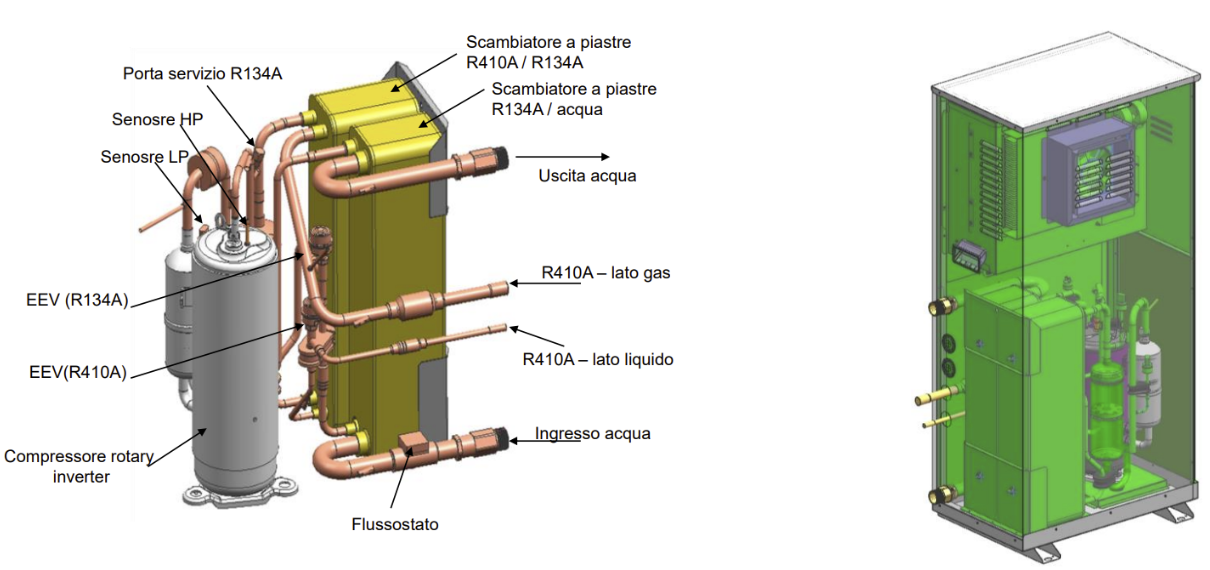
Figure 1. Hydro kit for domestic hot water production
The operating principle of the hydro kit ( Figure 2) involves the refrigerant (typically R-410a) supplying the VRF’s main distribution system transferring heat, via a brazed plate heat exchanger, to the module’s refrigerant (typically R-134a).
The latter, through a heat pump cycle and an additional heat exchanger, heats the water in the storage tank, which is then sent to the end-use points as needed.
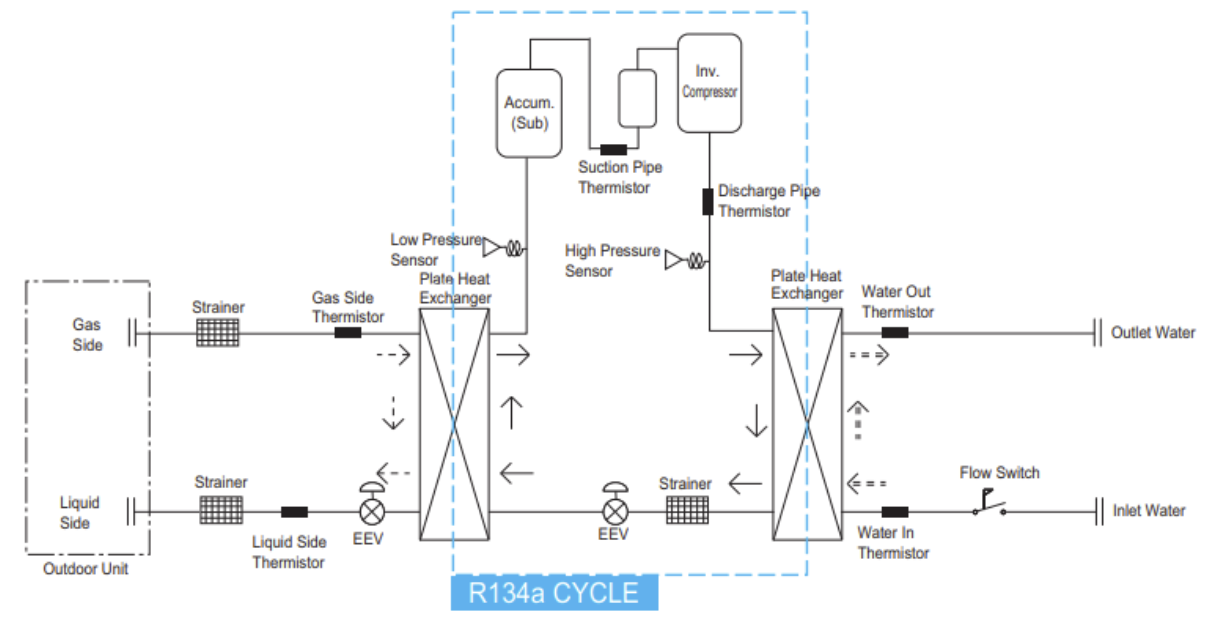
Figure 2. Domestic Hot Water Production: Operational Diagram and Internal Piping
Environmental Characteristics and Performance of the Refrigerant
The hydro kit fluid is a non-flammable hydrofluorocarbon (HFC) characterized by a low-to-moderate GWP value of 1,430 (GWP stands for Global Warming Potential, which is the global warming potential relative to CO₂, which by definition has a GWP of 1) and an ODP of 0 (ODP stands for Ozone Depletion Potential). These values are synonymous with reduced impact on global warming and no damage to the ozone layer.
An Integrated System for Energy Retrofits
The proposed domestic hot water solution, although it is tied to the implementation of a larger system such as a direct-expansion VRF system and cannot be implemented independently, is in line with the requirements for aggressive energy retrofitting, significantly increasing the property’s value while also improving the quality of the living spaces and the services provided.