



Photo by Jace & Afsoon on Unsplash
Author: Gabriele Cerri
Key Points of the Article
- The construction sector accounts for 40% of total energy consumption and 36% of greenhouse gas emissions in Europe.
- 85% of European buildings were constructed before 2001 and have poor energy performance.
- In Italy, 72.7% of residential buildings were constructed before 1976 and are characterized by high energy consumption and inefficiency.
- Only 13% of Italian buildings have an Energy Performance Certificate (APE), making it difficult to fully identify energy inefficiencies.
- Under the EU’s Green Buildings Directive, at least 16% of energy-inefficient nonresidential buildings must be retrofitted by 2030.
- The Italian public sector offers an opportunity for ecological transition, with 670,000 real estate properties that are not subject to historical or artistic restrictions.
- Achieving decarbonization goals requires collaboration among institutions, citizens, and businesses, as well as a sustainable national plan.
- Enertech Solution supports the ecological transition through energy audits and facility retrofit projects for public and private buildings.

The construction industry ranks among the most energy-intensive sectors; in fact, it accounts for 40% of total energy consumption, as well as 36% of greenhouse gas emissions and half of PM2.5. Furthermore, Europe’s building stock is aging, as 85% of buildings were constructed before 2001 and therefore have poor energy performance compared to current standards. These figures highlight the need for radical ecological transition measures in Europe’s building stock to achieve the climate neutrality goals by 2050 set by the 2019 Green Deal.
We are here to help you
Please contact us for any information you may need.
The latest news from the industry
Receive the latest articles from our blog on your email
The State of the Housing Stock in Italy
Residential real estate portfolio
As for the Italian real estate market, the situation is similar:
- 25.4% of residential buildings were built before World War II,
- 47.3% of Italian buildings date from the period between the postwar era and 1976,
- 12% date from the period between 1976 and 1990, and 15.3% were built after 1991.
Public Sector Real Estate Portfolio
With regard to the public sector, based on a reanalysis of the available data on construction periods collected by ENEA, the following is reported:
- 13% of the buildings date from before 1945,
- 45% were built between 1946 and 1980,
- 24% were built between 1981 and 1990, while public buildings constructed after 1991 account for 17%.
Furthermore, when considering energy performance certificates (APE), the predominance of the lowest energy classes is generally evident, meaning that most buildingsare characterized by high energy consumption and inefficiency. However, only 13% of buildings have been certified, so the data are not fully representative of the entire building stock.
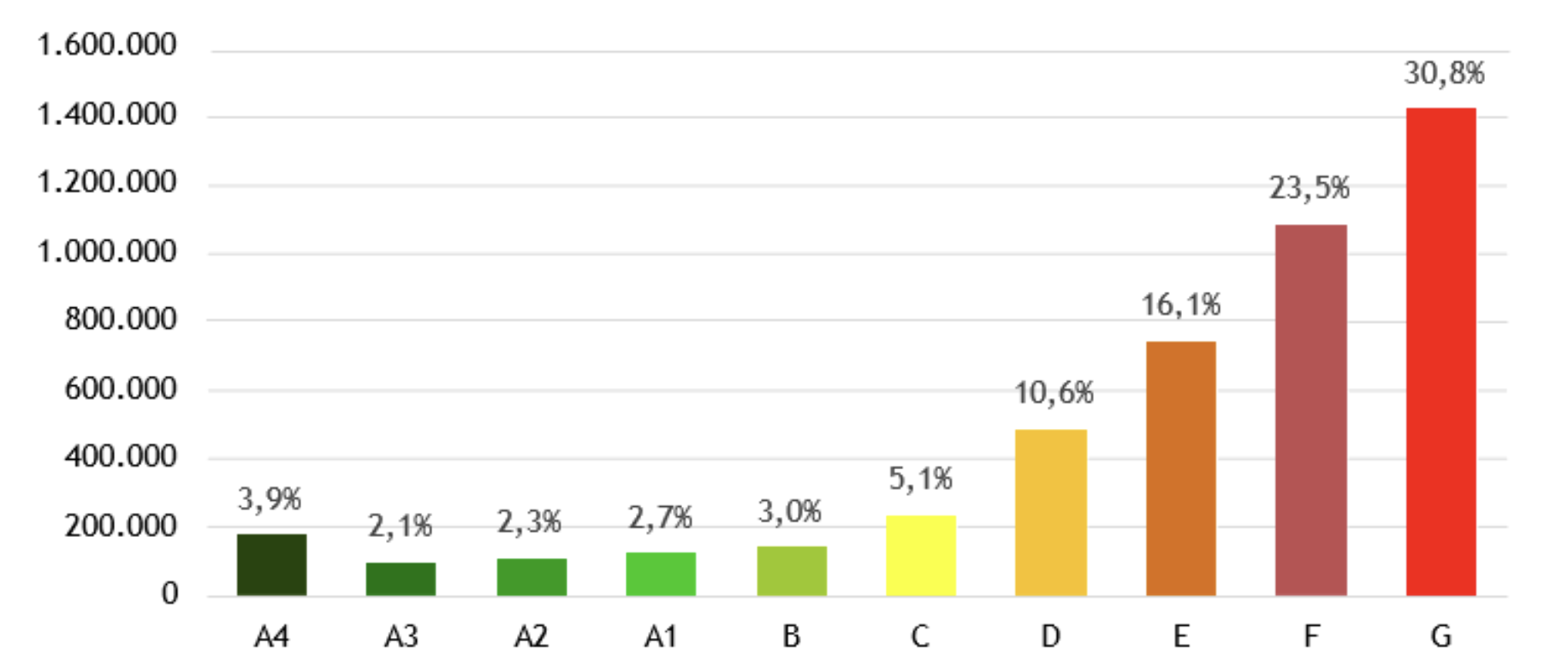
Figure 1. Breakdown by energy class of residential energy performance certificates (APE) issued through December 31, 2023; Source: ENEA analysis of SIAPE data
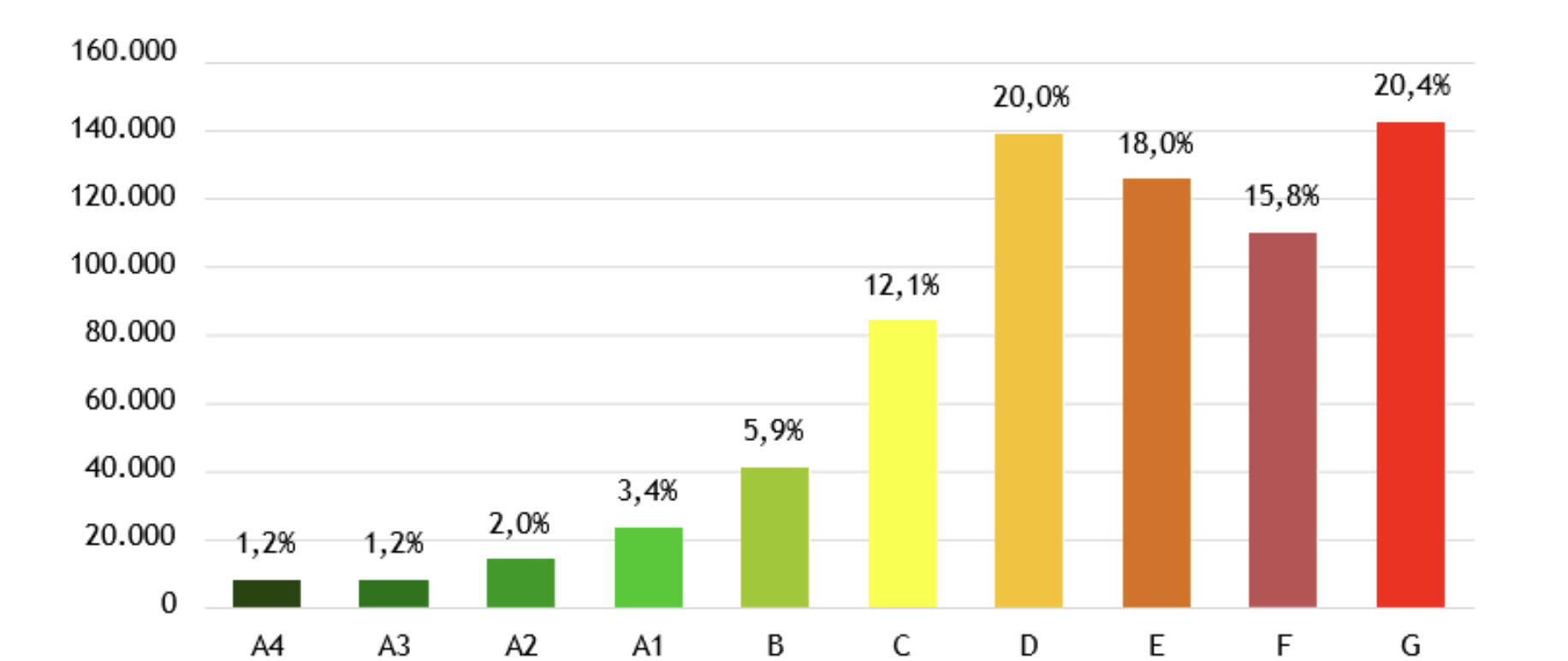
Figure 2. Breakdown by energy class of non-residential energy performance certificates (APE) issued through December 31, 2023; Source: ENEA analysis of SIAPE data
In light of these figures, it is clear that Italy’s building stock needs to be renovated, given the large number of obsolete buildings with poor energy performance.
The Ecological Transition as an Opportunity to Improve Energy Efficiency in Buildings
The public sector represents a major opportunity for ecological transition and improving the energy efficiency of Italy’s building stock, as 670,000 buildings have been identified within this sector that are not subject to any historical or artistic restrictions. In fact, it is essential to take advantage of opportunities for renovation with a view to complying with the provisions on reducing energy consumption in buildings mandated by EU directives such as the New Green Buildings Directive, which specifically calls for the renovation of at least 16% of energy-inefficient nonresidential buildings by 2030.
Achieving these targets and a green transition will only be possible through collaboration among citizens, institutions, and the private sector to increase the rate of redevelopment. In particular , it will be necessary to adopt a national plan that includes criteria for economic, technical, and environmental sustainability. An interesting development in the area of reducing environmental impact is represented by the sector sustainable construction and building life-cycle analysis.
Enertech Solution’s Contribution to This Opportunity for Ecological Transition
Enertech Solution, with its many years of experience and a close-knit multidisciplinary team helps the public sector achieve its decarbonization goals through consulting services, technical and economic feasibility studies, and the design of energy retrofit projects.
Among the activities carried out, the energy audit to assess energy consumption and identify opportunities for efficiency improvements; for example, here is the energy audit of a shopping center in the province of Milan. Another featured project is the project by Technical and Economic Feasibility for plant renovation projects in buildings owned by a municipality in the Milan hinterland.