



Photo by Marek Piwnicki on Unsplash
Author: Giangiacomo Sommariva
The carbon footprint represents the amount of greenhouse gases emitted by a product, industrial process, organization, or individual. The carbon footprint is therefore a key indicator for measuring the impact of human activities on climate change.
There are several types of greenhouse gases, some of which occur naturally in the atmosphere but can also be produced by human activities. These gases play a crucial role in keeping Earth habitable by trapping some of the sun’s radiation and keeping the planet warmer than it would be without them.
Each greenhouse gas has a Global Warming Potential (GWP), an indicator that measures a gas’s ability to trap heat in the atmosphere relative to CO2, which is used as a reference with a value of 1. This measurement makes it possible to quantify the overall effect of emissions when multiple greenhouse gases are present together, allowing for a more accurate analysis of the impact of human activities on climate change and, consequently, of the carbon footprint. The table below lists the main greenhouse gases and their respective GWPs, calculated over a 100-year time frame.
| COMPOUND / MOLECULE | GWP (100 years) |
| Carbon dioxide (CO2) | 1 |
| Methane (CH4) | 21 |
| Nitrous oxide (N2O) | 310 |
| R134a | 1,430 |
| R410a | 2,088 |
| Sulfur hexafluoride (SF6) | 23,900 |
We are here to help you
Please contact us for any information you may need.
The latest news from the industry
Receive the latest articles from our blog on your email
Policies and Regulations
Starting with the 1997 Kyoto Protocol and continuing with the Paris Agreement signed in 2015 by 177 countries, the European Union and its member states have embarked on a long journey to combat climate change. The European Union has launched the “Green New Deal” with the goal of making all countries on the continent climate-neutral by 2050, setting an interim target of reducing emissions by 55% compared to 1990 levels by 2030.
To ensure this important goal is achieved, an emissions trading market—the EU ETS—was established. This is a cap-and-trade system in which companies must purchase permits to emit CO₂, thereby incentivizing emissions reductions. This system requires various categories of industrial facilities to participate, including large electricity and heat production plants, energy-intensive industrial sites, steel mills, iron, metal, and cement production facilities, civil aviation, and others, thereby covering 23% of global emissions.
The revenues, which totaled approximately 22.5 billion euros in 2022, are allocated to climate and energy projects, such as initiatives to promote renewable energy, projects in the transportation sector, and energy efficiency projects, as well as efforts to mitigate the effects of the recent energy crisis.
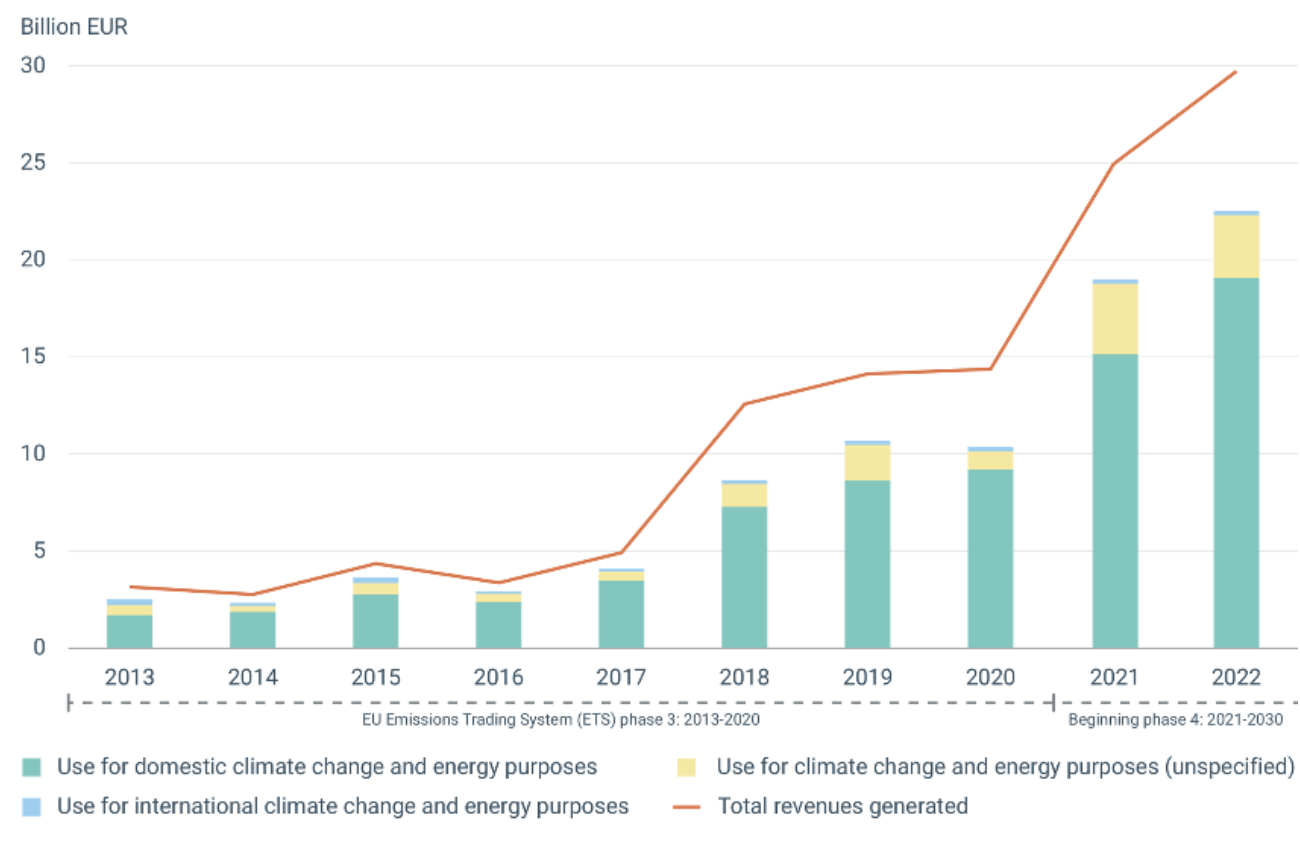
Figure 1. Revenues Generated by the EU ETS Market. (Source: European Environment Agency)
At the same time, the European Union has also adopted a series of regulations targeting specific industrial sectors to reduce greenhouse gas emissions. Among these, the Renewable Energy Directive and the Energy Efficiency Directive set binding targets to increase the share of renewable energy and improve energy efficiency by 2030. In addition, the Carbon Border Adjustment Mechanism (CBAM), which will be phased in starting in 2026, aims to prevent so-called “carbon leakage” by imposing a carbon cost on products imported from countries with less stringent environmental regulations. “Carbon leakage” refers to the situation that could arise if, due to cost factors related to climate policies, companies were to relocate production to other countries with more flexible emissions limits. This could lead to an increase in their total emissions.
In Italy, the Integrated National Energy and Climate Plan (PNIEC) calls for the adoption of specific measures for the industrial sector, including incentives for technological innovation and decarbonization, as well as the strengthening of policies to improve energy efficiency and promote renewable energy. These joint efforts are part of the broader “Fit for 55” package, which includes a series of regulations aimed at reducing greenhouse gas emissions across all economic sectors.
Where are we today?
Looking at the 2019 carbon footprint data for the European Union, the energy production sector is responsible for 77.1% of greenhouse gas emissions, of which about one-third is attributable to the transportation sector. The remaining emissions consist of 10.55% from agriculture, 9.10% from industrial processes and product use, and 3.32% from waste management.
That same year, Italy ranked fourth among the European Union’s largest emitters, with 418 MTonCO2 (about 10% of the total), surpassed only by Germany, the United Kingdom (which was still part of the EU in 2019), and France.
In Italy, in 2021, total greenhouse gas emissions, expressed in CO2 equivalents, decreased by 20% compared to the base year, 1990, falling from 521 to 418 million metric tons of CO2 equivalents. This reduction is due, on the one hand, to lower energy consumption and industrial output resulting from the economic crisis and the relocation of certain manufacturing sectors, and, on the other hand, to growth in energy production from renewable sources and increased energy efficiency.
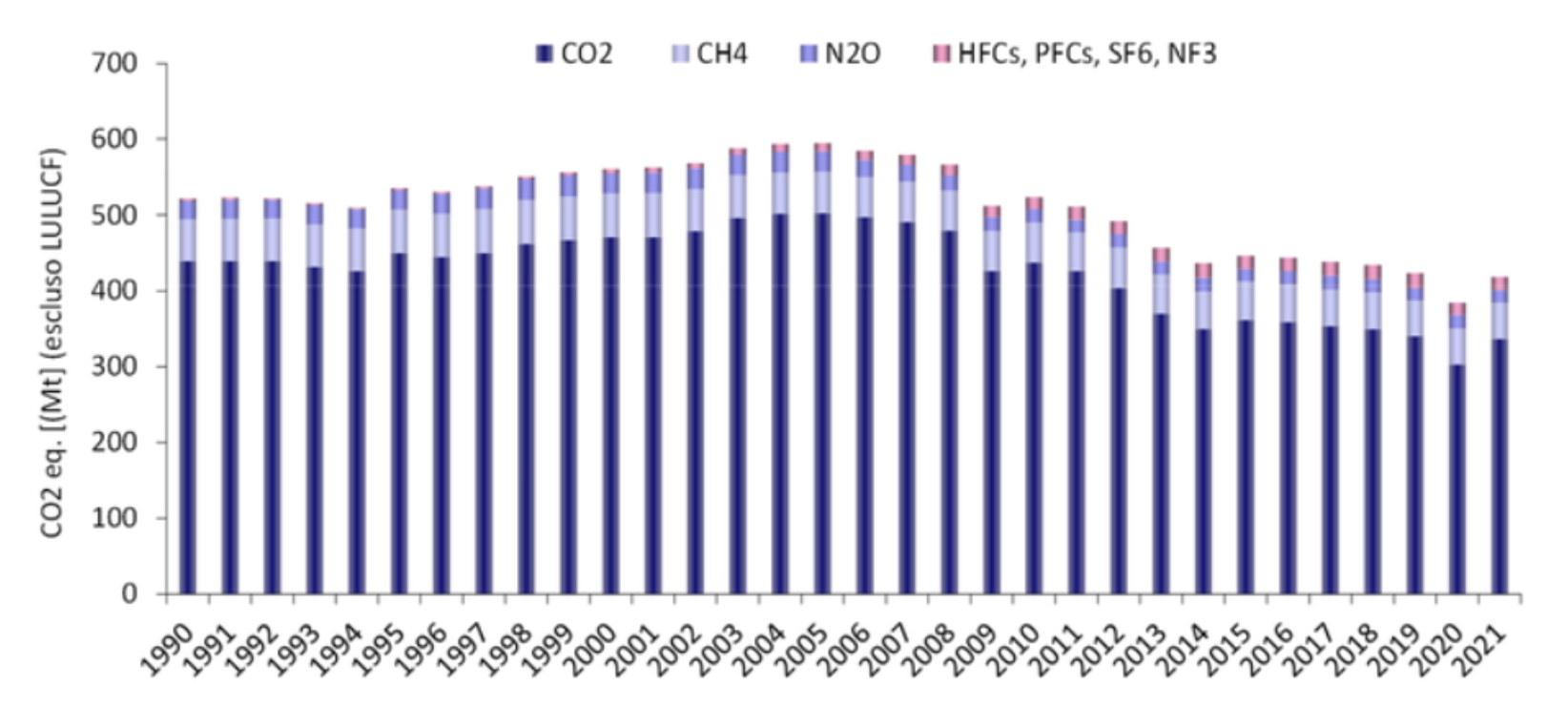
Figure 2. National emissions of climate-changing gases from 1990 to 2021, by gas. (Source: ISPRA)
The Road Ahead
The Integrated National Energy and Climate Plan (PNIEC) is Italy’s strategy for achieving its ambitious emissions reduction targets by 2030. As of 2021, as previously reported, our country emits approximately 418 million metric tons of CO2 per year, but the target set for 2030 is to reduce this figure to approximately 220–230 Mton, equivalent to 45% of 1990 emissions.
To achieve this goal, the PNIEC is based on three main pillars: increasing the use of renewable energy sources, improving energy efficiency, and directly reducing greenhouse gas emissions. Specifically, the plan aims to achieve a 30% share of energy from renewable sources in final energy consumption, while energy efficiency is expected to improve by 43% compared to the PRIMES 2007 baseline scenario.
In addition, the PNIEC distinguishes between sectors covered by the ETS and “non-ETS” sectors, with reduction targets of 43% and 33%, respectively, compared to 2005 levels. This effort will require not only investments in technology and infrastructure but also strong coordination between the public and private sectors to accelerate the transition to a low-carbon economy.
In conclusion, it can be said that the decarbonization of the economy requires a radical transformation of the energy system and a significant shift in the ways we produce, travel, and live. The process is characterized by multiple factors and uncertainties that make it difficult to identify a single trajectory over the medium- to long-term. The real challenge in the fight against climate change will therefore be to find new technological and governance solutions capable of reconciling economic growth with environmental sustainability.
ISPRA: Italy’s Long-Term Strategy for Reducing Greenhouse Gas Emissions. (January 2021)
https://emissioni.sina.isprambiente.it/scenari-delle-emissioni/