




Photo by Enertech
Author: Francesco Giuseppe Lefosse
Key Points of the Article
- Thebuilding automation is now a cornerstone of modern energy management: it reduces energy consumption, emissions, and operating costs through intelligent system control.
- The Class B represents an advanced level of automation, in which the various subsystems (HVAC, lighting, shading, monitoring) communicate with each other to ensure comfort and energy savings.
- The transition from a Class D or C to a Class B requires targeted measures regarding regulation, centralized control, and oversight, with particular attention to BACS systems and their interoperability.
- The integration of a BMS (Building Management System) enables the monitoring and coordination of subsystems, improving overall efficiency and allowing for centralized management of energy data.
- Class B also includes the collection and analysis of consumption data and theintegration with renewable energy sources, which are essential for compliance with regulations and sustainability goals.
Nowadays,automation plays a key role in the energy management of buildings, with a focus on optimizing energy consumption and reducing theenvironmental impact. With the update to the regulations and theintroduction of incentives such as the Conto Termico 3.0, many companies and property owners are finding themselves having to upgrade their building automation systems to reap the economic benefits expected.
In particular, this article explores the importance of theupdating/implementation of a system that complies with the requirements of the automation class for B: this level ensures theimplementation of advanced features for energy management.
Upgrading from building automation level D or C to level B
Most of the systems currently found in buildings can be classified into the following levels of automation BACS (Building Automation and Control Systems) D or C: the former is prevalent in the residential sector, the latter in the nonresidential.
However, it is possible to level all the services covered of evaluation to the B,, by focusing building automation efforts building automation on the key points analyzed below:
- Adjustment and Optimization of HVAC Systems.
- Centralized control and monitoring.
- Automation of lighting and sunshades.
- Monitoring, consumption analysis, and centralized alarm management.
- Integration with renewable energy sources.
Adjustment and Optimization of HVAC Systems
A Class B must be capable of dynamically controlling the heating, ventilation, and air conditioning (HVAC) systems based on parameters such as outdoor temperature, occupancy and time slots. This can be achieved by:


- Valves and Electronic Actuators to regulate air flows and water.
- Temperature, Humidity, and CO₂ Sensors to adjust ventilation in real time.
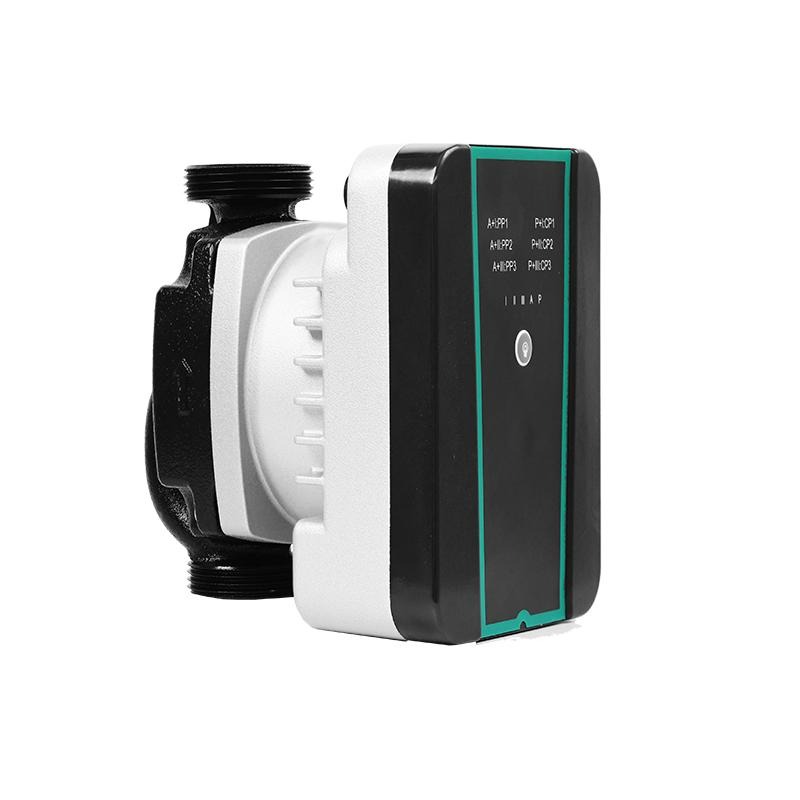
- Circulation pumps that do not operate simply with ON-OFF control but are capable of adapting to the dynamic needs of the of the building and its systems thanks to the inverter systems.
- Smart Control of the generator to optimize energy consumption.
Centralized Control and Monitoring
Often, what is described in point 1 may already be present in current systems; the main problem, however, is that they act as mere local controllers that are not coordinated with one another to ensure functioning and harmonious adjustment of the parameters.

The additional step that is necessary, therefore, lies in the ability to integrate them by implementing a BMS (Building Management System): a platform for centralized monitoring that coordinates the operation of all sub-services present:
- heating;
- cooling;
- ventilation;
- lighting and any sunshades.
This architecture will ensure communication between the interiorand heating plant and/or power generation system and central control room.
Lighting and Sunshade Automation
The integration of presence and light sensors allows for the lighting automatically, preventing waste and improving indoor comfort. In addition, if there are any sunshades (such as external roller shutters), if motorized, once connected to the central control unit, fall under the provisions ofClass B building automation.
Monitoring, consumption analysis, and centralized alarm management
It is not enough to limit interventions to simply management of operating parameters and usage profiles, but it is mandatory to monitoring and theconsumption analysis that allow you to draft trend lines, calculation of consumption, evolutionary analyses, Energy Performance Assessments and benchmarking for proposals regarding improvement measures.
Finally, the system must be capable of serving as a a single diagnostic center for receiving fault alerts and alarms in order to reduce response times and energy waste resulting from even temporary malfunctions.
Integration with Renewable Energy Sources
If applicable—that is, if the building uses renewable energy sources (photovoltaic, solar thermal, geothermal), a Class B BACS system must be capable of integrate and optimize the management of theenergy produced, giving priority, for example, during daylight hours, to meeting electric/thermal be met by ‘green’ energy.
Possible improvement
This article has sought to demonstrate how, with a good understanding of the classification mechanism of buildings, it is possible toidentifying the areas that govern it, it is possible to stay in the running and keep pace with both the times and regulations.
Knowing how and where to take action, while optimizing time and resources, is the first step toward improving the systems used every day, but at the same time, it’s clear just how much room there is to achieve the optimal solution.
Would you like to find out how to improve your building’s efficiency and achieve Automation Class B? Contact the team at Enertech Solution for personalized technical consultation.