



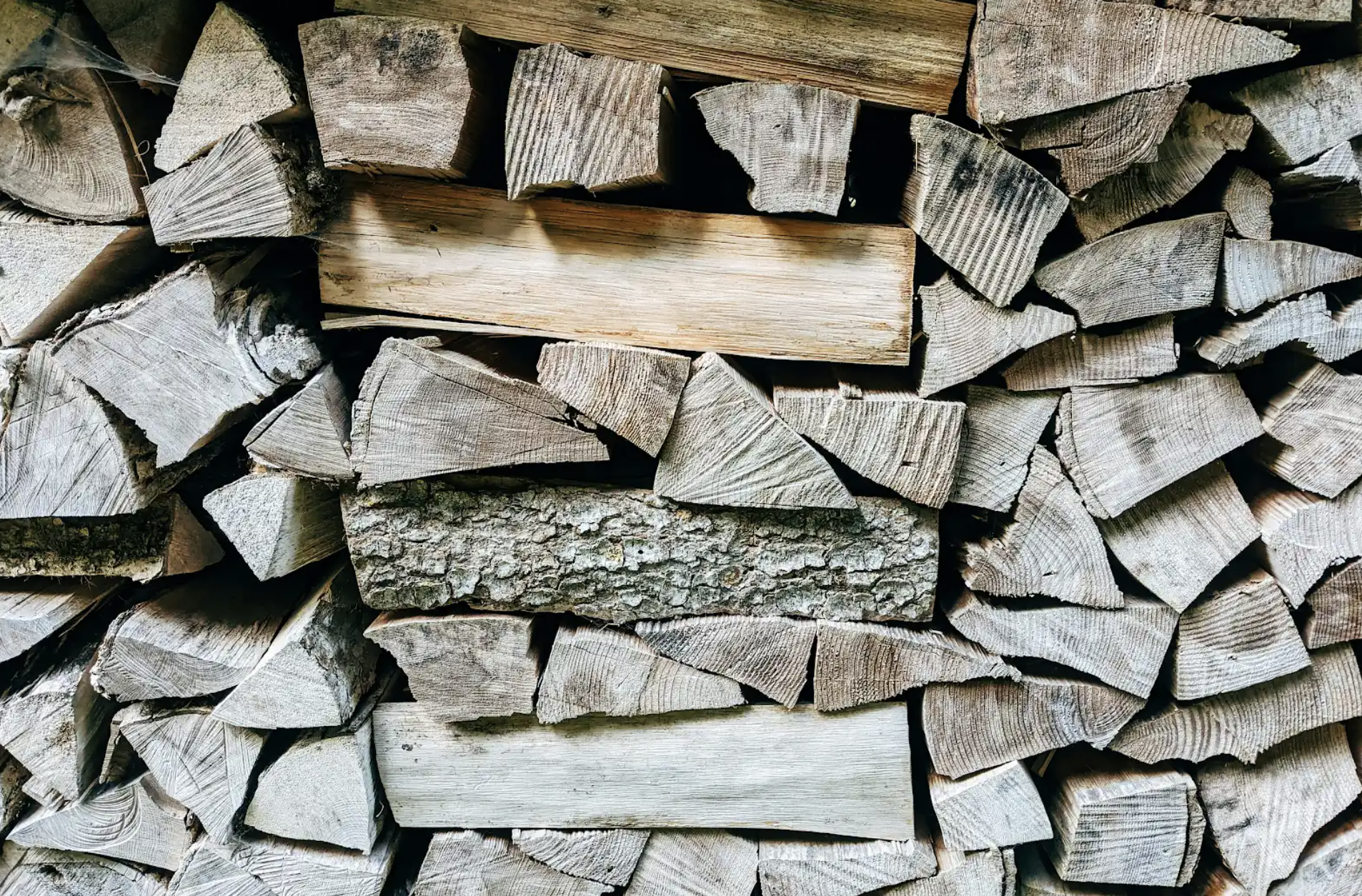
Photo by Francesco Ungaro on Unsplash
Author: Francesca Ciccolella
The construction sector is among those with the greatest environmental impact, particularly in terms of raw material consumption and pollutant emissions generated throughout the life cycle of buildings (we’ve already discussed this here). It is therefore essential to take a different approach to raw materials and resources. Today, we speak of circular construction—a system designed to be self-regenerating, ensuring complete environmental sustainability. Throughout the entire construction process, it is necessary to focus on reducing energy costs, environmental protection, residential well-being, and the use of eco-sustainable building materials—materials that can be transformed into resources, are easily disposed of when they can no longer be used, and have a low environmental impact.
In fact, the choice of technological solutions and construction materials is one of the main causes of environmental pollution; it is therefore necessary to assess the potential impacts of the selected solutions in advance, during the design phase.
We are here to help you
Please contact us for any information you may need.
The latest news from the industry
Receive the latest articles from our blog on your email
Applicable Regulations
European Regulation (EU) No. 305/2011 (CPR) on Construction Products establishes specific harmonized technical rules for the marketing of construction products. These rules set forth the seven basic requirements applicable to construction works:
- Mechanical strength and stability;
- Fire Safety;
- Hygiene, Health, and the Environment;
- Safety and accessibility during use;
- Noise protection;
- Energy savings and heat retention;
- Sustainable use of natural resources.
To evaluate the last point—namely, the environmental compatibility of a building component—reference is made to the CAM. The Minimum Environmental Criteria (CAM) are environmental requirements defined for the various phases of the construction process, aimed at identifying the best design solution from an environmental perspective throughout the entire life cycle of the structure. These criteria are defined as “minimum” because they represent the basic elements that characterize the procurement procedures that are preferable from an environmental standpoint. They are defined in accordance with the provisions of the Plan for Environmental Sustainability in Public Administration Consumption.
The application of CAMs in the construction industry promotes the widespread use of environmental technologies and products that do not pollute the environment.
Environmental Certification of Eco-Friendly Materials
Environmental labels are used to verify that materials comply with CAM requirements; these labels provide information on a product’s life cycle, the use of raw materials and energy, CO2 emissions, and possible disposal methods. Environmental labels are classified as public or private and, in turn, may relate to a single environmental factor or be multi-criteria, meaning they refer to a specific number of environmental performance indicators. The main environmental certifications are:
- Type I environmental label (UNI EN ISO 14024): Based on a multi-criteria system that takes into account the product’s entire life cycle, it is voluntary and subject to external certification by an independent body. At the European level, the most widely used is the Ecolabel, which takes into account both the environmental impact of products over their entire life cycle and their quality, as well as their effects on consumer health;
- Type II Environmental Label or Self-Declared Environmental Claim (UNI EN ISO 14021): contains environmental self-declarations by manufacturers, importers, or distributors of products;
- Type III environmental label or EPD – Environmental Product Declarations (UNI EN ISO 14025): provides statements based on established parameters that quantify the environmental impacts associated with the product’s life cycle, as calculated through an LCA study.

Examples of sustainable building materials
Building materials are considered sustainable when they have a low environmental impact, promote energy savings, offer better quality and comfort, have greater durability, are free of toxic substances, and are recyclable. In fact, they are not derived from synthetic chemicals but from raw materials extracted in an environmentally responsible manner (or found in abundance locally) and are renewable. Types of natural building materials include innovative materials, such as—to name a few—reclaimed wood, cellulose fiber, straw, bio-bricks, and recycled rubber.
Reclaimed wood
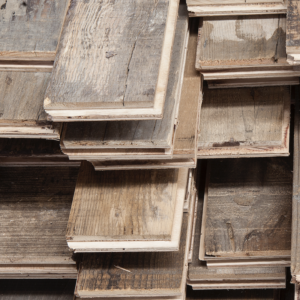
Reclaimed wood is a sustainable building material that was previously used in the construction of another structure and, after that structure is demolished, is recycled and used in a new building. It can be used in new construction—especially when large wooden beams are carefully dismantled—or it can be used to make flooring and furniture by transforming the reclaimed wood into laminated wood or plywood.
Cellulose fiber
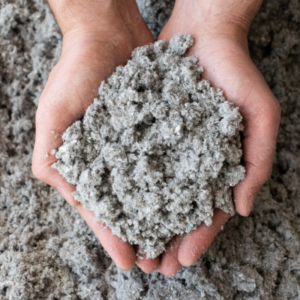
Cellulose fiber is made from recycled newspaper. Its use as an insulating material helps maintain the breathability of walls while regulating the indoor temperature. In addition, cellulose fiber acts as a humidity buffer: it absorbs some of the moisture on hot, humid days and releases it when the air is drier.
Straw
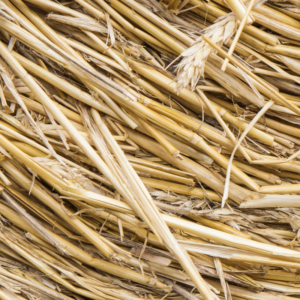
Straw is a byproduct of grain cultivation and therefore requires no additional energy to produce. It is a natural, renewable resource that grows through photosynthesis, using solar energy, water, and minerals from the soil. Straw is a natural building material with excellent insulating properties, both thermally and acoustically; it therefore ensures low heat loss and significant energy savings.
Straw insulation panels are eco-friendly, vapor-permeable, and are produced through a high-temperature, high-pressure extrusion process that does not involve the use of chemical adhesives. They are fire-resistant, can dampen sound waves, are sturdy, and mechanically stable; furthermore, they are 100% recyclable.
Biobricks
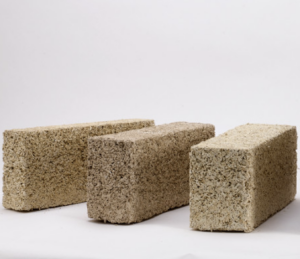
Biomattoni are natural building materials produced in our country, the result of experimentation in the construction industry; they are prefabricated blocks made of hemp and lime. Their production requires minimal energy, and they provide excellent thermal and acoustic comfort; they are also resistant to both fire and freezing temperatures.
Furthermore, once the building reaches the end of its useful life, the materials can be reused by breaking them up and remixing them with the addition of lime and water.
Recycled rubber
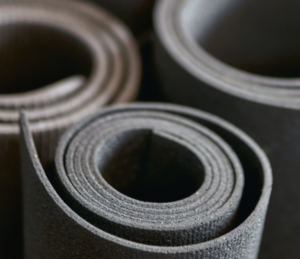
Recycled rubber is one of the most innovative materials and can be used to create construction products for a variety of applications. It is resistant to organic agents, temperature fluctuations, and weathering; it also possesses significant elasticity and impact resistance, which make it an excellent acoustic insulator against noise and vibrations.
Its high ability to maintain its performance over time is a significant added value.
Conclusion
Alongside these, other increasingly efficient eco-sustainable building materials are being studied and used more widely, with the aim of creating sustainable buildings, reducing air pollution and the impact on natural ecosystems, lowering greenhouse gas emissions, and increasing the energy efficiency of buildings.
The adoption of sustainable practices and natural, eco-friendly materials in construction is essential for reducing environmental impact and creating more efficient buildings.
Enertech Solution can support businesses and public administrations in energy efficiency projects, contributing to a more responsible future that is in balance with natural resources.