



Photo by D koi on Unsplash
Author: Federico Re Ferrè
The growing search for solutions with low environmental impact and high efficiency has led, in recent years, to an increasing focus on the use of district heating systems. Although district heating originated in the late 19th century, this solution was not adopted in Italy until the 1970s. To date, nearly all of Italy’s district heating networks are located in the northern part of the peninsula. According to the GSE, as of the end of 2020, there were 337 active district heating networks in Italy, covering a total length of just over 5,000 km, with more than half concentrated in Lombardy and Piedmont. Residential users account for 63% of the total volume served, while 34% is attributed to commercial and institutional users, and only 3% to industrial users. In the remainder of this article, we will examine the main technical characteristics of district heating and then highlight the advantages of this solution.
We are here to help you
Please contact us for any information you may need.
The latest news from the industry
Receive the latest articles from our blog on your email
Thermal Energy Production
A district heating system involves the distribution of a high-temperature heat transfer fluid to supply thermal energy to consumers. The main advantage of district heating lies in the ability to use renewable energy in a highly efficient manner. According to Legislative Decree 102/2014, Article 2, a district heating system may be defined as efficient if it uses one of the following generation configurations:
a) 50% of energy from renewable sources;
b) 50% of waste heat;
c) 75% of cogenerated heat;
d) 50% from a combination of the above.
In most cases, therefore, district heating plants typically consist of cogeneration units, waste-to-energy plants, industrial process heat recovery systems, renewable energy plants, and heat pumps. In Italy, approximately 68% of installed capacity is dedicated solely to heat production, while 32% produces both heat and electricity through cogeneration.
Distribution
Heat is typically distributed using one of three types of heat transfer fluid:
- Hot water with a supply temperature not exceeding 90°C to avoid the risk of vaporization
- Superheated water with a supply temperature of 120°–130°C, determined by the strength and reliability limits of the pre-insulated pipes;
- Steam, which is rarely used due to technical difficulties and high costs
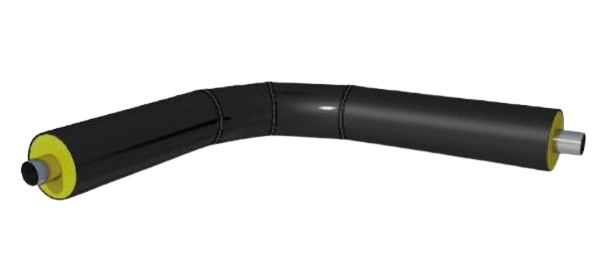
Figure 1. Pre-insulated curved pipe for district heating.
The most commonly used type of piping for district heating is pre-insulated piping (Figure 1), consisting of an inner steel pipe, an outer polyethylene pipe, and insulation sandwiched between the two pipes. This solution is particularly valued for its low cost, excellent efficiency (temperature losses are in the range of 1°–2°C per kilometer), and good durability (the polyethylene protects against stray currents, reducing the risk of corrosion). This type of pipe, which ensures good insulation performance over time with fluids no hotter than 120°–130°C, does not require tunnels and is typically buried in sand beds. In addition to straight sections, these pipes are also manufactured in curved sections, elbows, branches, and valves.
The types of distribution schemes for district heating networks can be summarized into three categories:
- Antenna-type: features a main shaft from which various branches extend;
- Loop-shaped: it takes the form of a closed circuit that is highly adaptable to future expansions;
- Mesh network: a series of closed loops connected at multiple points, ensuring high reliability even for future expansions; due to its cost, this configuration is suitable only for areas with high population density.

Figure 2. From left to right: a diagram of an antenna distribution system, a ring distribution system, and a mesh distribution system.
Connection to the end user
The connection to the end user can be made in two ways: direct or indirect.
In the direct connection method, the water flows directly into the user’s distribution circuit. This option is feasible only for small-scale networks operating with hot water.
In the indirect connection method, however, the district heating substation features a plate heat exchanger that separates the fluid in the district heating network from the fluid used by the consumer. The district heating substation is usually also equipped with a heat meter for accurate consumption measurement, a circulator for the secondary circuit, a control valve, and various auxiliary valves and measuring instruments such as thermometers and pressure gauges. If the user also requires domestic hot water in addition to space heating, a second heat exchanger is typically installed, which can be connected in series or in parallel with the first one.
Advantages and Disadvantages of District Heating
District heating has proven to be a highly efficient method with a low environmental impact, especially when it can be powered by renewable sources or through cogeneration. Even when fossil fuels are used, pollution is generated only at the district heating plant itself, thereby avoiding widespread pollution across a large area, as would be the case with on-site heating for individual buildings. District heating also provides greater safety for users by eliminating the need for combustion systems in homes. The economic benefits for users can be realized through lower maintenance costs, lower heating costs, and the ability to qualify for the 10% VAT rate for private use instead of the 22% rate.
Despite its significant advantages, district heating also has some disadvantages: due to installation costs, it is a system that can only be implemented in densely populated areas to ensure that the payback period is not excessively long. In the case of a natural gas-fired plant, there may be a concentration of pollutants near the plant, particularly nitrogen oxides.