



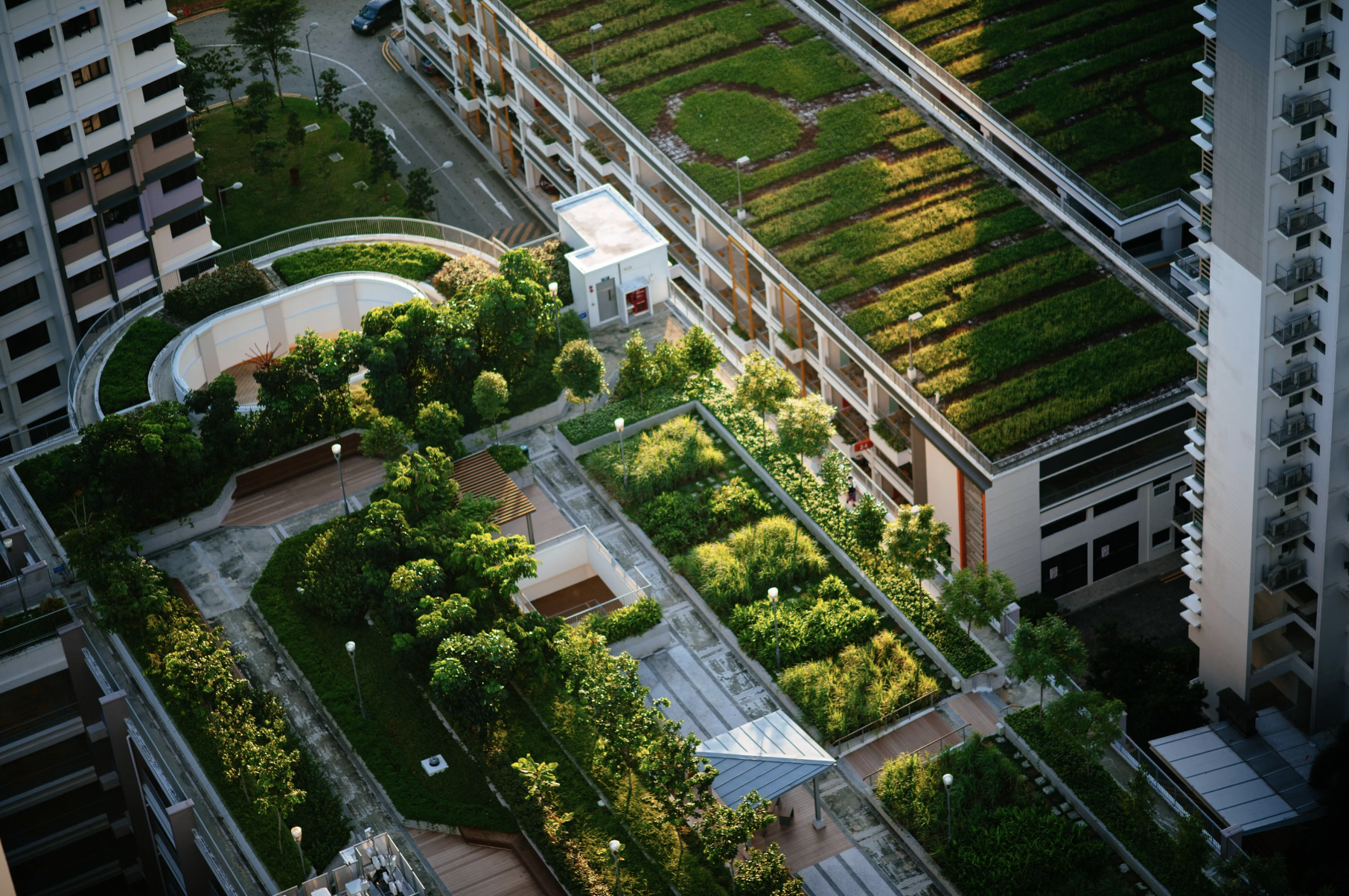
Photo by D koi on Unsplash
Author: Juan Sebastian Penaranda
When we talk about pollution, we think of cars, factories, and airplanes. We rarely think of buildings. The reality, however, is that this sector is one of the leading emitters of greenhouse gases and also one of the biggest consumers of natural resources, starting with the soil itself.
For example, here are some figures from the World Watch Institute’s 2023 report: globally, the construction sector accounts for 23% of air pollution, 40% of drinking water pollution, and generates 50% of the waste sent to landfills. Furthermore, it consumes 40% of the world’s production of raw stone, gravel, and sand, as well as 25% of virgin wood, which is often the result of deforestation. In the European Union, the figures are even more alarming: the Old Continent’s building stock is responsible for 40% of energy consumption and 36% of CO2 emissions.
We are here to help you
Please contact us for any information you may need.
The latest news from the industry
Receive the latest articles from our blog on your email
Sustainability in the Construction Industry: A Necessary Alternative
Recognizing the significant environmental impact of the construction industry, an alternative to the traditional way of designing and building our structures has been developed in recent years.
This new and necessary methodology changes the way we work and evolve within the industry and encourages us to consider and analyze all environmental impacts associated with the entire process of constructing our buildings—from the conceptualization and design phase, through construction and use, to eventual demolition and waste management.
Sustainable construction aims to minimize all environmental impacts generated throughout a building’s entire life cycle, taking into account factors such as the efficient use of energy and water, the use of environmentally friendly building materials and natural resources, proper waste management, and the use of renewable energy.
Its goal, therefore, is to construct energy-efficient and environmentally friendly buildings while ensuring the project’s economic viability.
Phases Analyzed in the Life Cycle of a Building
A building has environmental impacts throughout its entire life cycle, which can be divided into several phases:
A: Production or manufacturing phase;
B: Construction phase;
C: Use phase;
D: Demolition phase;
E: Externalized impacts after the building’s life cycle.
With regard to the production phase, this analysis examines the amount of energy and resources used for the extraction of raw materials, the transportation of materials to manufacturing plants, and the production of the final construction products, along with their respective environmental impacts.
The construction phase includes the transportation of construction materials to the job site, the energy and resources required during the building construction process—such as equipment and fuel for machinery—as well as any waste generated during construction.
The use phase considers the energy and resources required throughout the building’s life cycle. These are primarily related to lighting, air conditioning, specific utilities, water use, and materials for maintenance, repairs, and any replacements of building components or mechanical and electrical systems.
For the demolition phase, reference is made to the energy and resources required for the proper demolition and disposal of waste generated during deconstruction at the end of the building’s life cycle.
Finally, in the last phase, we analyze how the various types of waste generated by the demolition site are reused in other construction projects or initiatives beyond the life cycle of the building in question. In this regard, it is important to be able to deconstruct the building or technological components present in the analyzed building so that they can be fully reused in future projects, thereby generating a positive environmental impact by reducing the number of new components or products that need to be manufactured.
The process of analyzing and documenting the environmental impacts generated during each of these phases is called the life-cycle assessment (LCA) of a building. LCA is considered the most effective method to date for reducing the sector’s environmental impact, as it allows for the identification of the most polluting processes or materials as early as the design phase, enabling the adoption of appropriate strategies and the selection of sustainable building alternatives.
Benefits of Life Cycle Assessment in the Construction Industry
A proper LCA analysis will yield substantial benefits not only for the environment but also for the entire project design and development team, as well as for the building’s future owners and occupants:
- Current and future building owners can make more informed decisions regarding sustainability;
- Various design options can be evaluated by conducting a comparative analysis of sustainability among different components or processes capable of meeting the same technical requirements;
- You can obtain industry-specific sustainability certifications, such as LEED, BREEAM, the Living Building Challenge, or Passivhaus;
- In the case of national or European calls for proposals for renovation projects that prioritize sustainability, a clear competitive advantage is guaranteed;
- This provides an opportunity to compare, using international sustainability benchmarks, the construction and design methods used at the regional level with those used in other countries, in order to identify innovative alternatives that can be adopted in the sector.
The Future of Sustainable Construction
The competitive advantages that the implementation of sustainable building measures brings to the entire construction industry are countless:
- Contribution to improving the environment and protecting the planet;
- Improvement of the construction company’s image and brand positioning through more environmentally friendly practices;
- Reduced consumption and cost savings;
- Promoting the growth of a green market by optimizing the building’s life cycle, which increases property value;
- Improving the quality of life and health of people who live or work in these facilities;
- Opportunities to participate in public works bids, as recent regulations being developed in the sector support this type of green procurement.
Until now, construction practices have been governed solely by economic criteria, resulting in scandalous levels of pollution and a decline in sustainability caused by the sector. For this reason, a paradigm shift is essential: construction methods used in the past must be adapted to new requirements, prioritizing the protection of our planet and the development of a green market, where end customers are highly interested in choosing more sustainable solutions.
It is possible to achieve this balance, in which the comfort of the building can be enhanced while reducing the project’s environmental impact and the facility’s operating costs, and at the same time increasing the economic profitability of the process.