



Photo by Petrmalinak on Freepik
Author: Federico Re Ferrè
Key Points of the Article
- Thermostatic valves allow you to regulate the temperature in individual rooms, improving home comfort and energy efficiency.
- The basic design includes a valve and a thermostatic head; the manual versions are easy to use, while the electronic versions offer smart programming and remote control features.
- Proper sizing and calibration of the valves are essential for ensuring effective hydraulic balancing and optimizing heat distribution.
- Proper installation must take into account the diameter, material, and shape of the pipes in order to select the most suitable valve and ensure the system performs effectively.
Room control is one of the key aspects of energy efficiency. The ability to control individual room outlets represents the most advanced level of control, enabling maximum efficiency and optimal comfort.
In radiator systems, the room control device is the so-called thermostatic valve. The remainder of this article will explain the main characteristics of thermostatic valves, the most common types, and the information needed to size thermostatic valves.
Structure and Operation of Thermostatic Valves
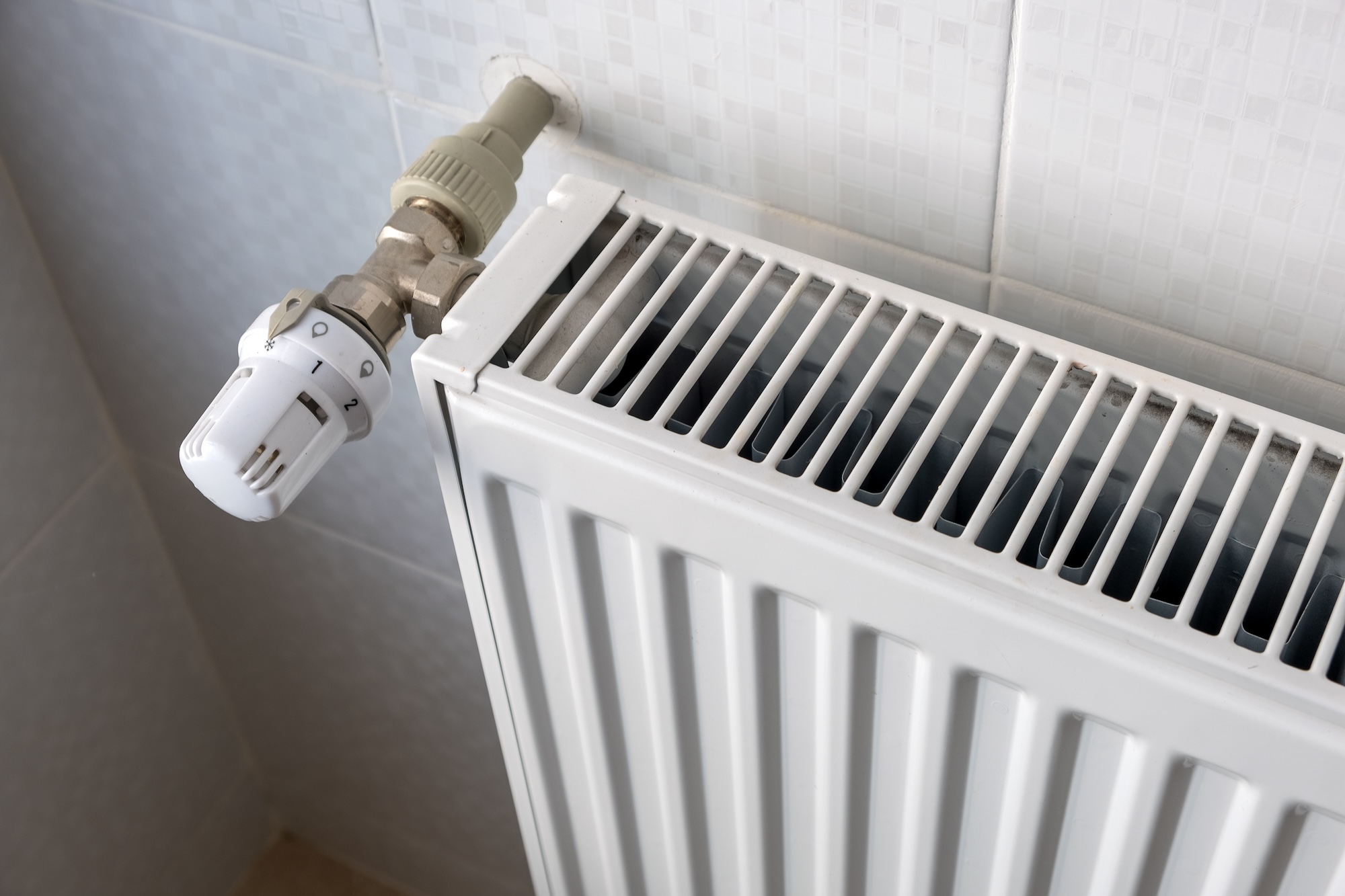
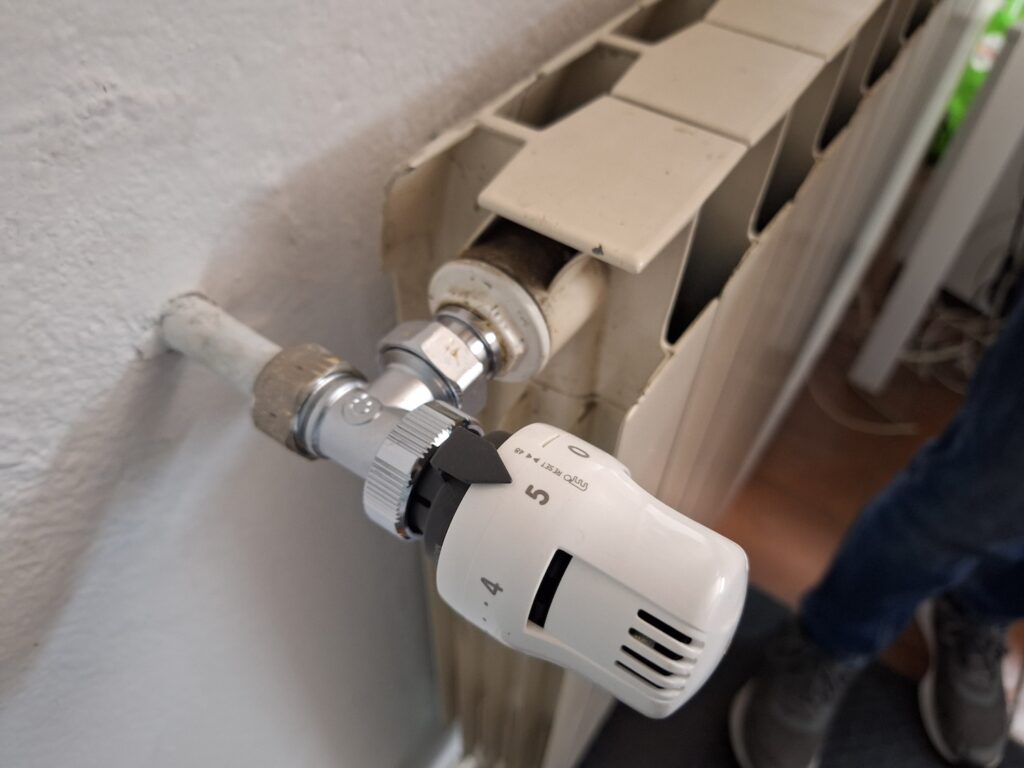
The thermostatic valve consists of two main parts: the valve itself and the thermostatic head. Each radiator is equipped with a valve that may be thermostatic (i.e., capable of accommodating a thermostatic head) or non-thermostatic.
A thermostatic valve is equipped with a small piston that is controlled by the thermostatic head to close or open the valve’s shutter and thus regulate the water flow to the outlet.
The manual thermostatic valve is usually equipped with a scale (ranging from 0 to 5) that allows the user to set the desired room temperature. The scale covers a temperature range from 5° to 28°C (temperature ranges may vary slightly depending on the brand and model).
When the user selects a value, it sets the valve opening, which allows that temperature to be maintained in the room; if the room temperature fluctuates throughout the day (due to increased or decreased solar gain, changes in outdoor temperature, etc.), the bulb inside the thermostatic head expands (more heat) or contracts (less heat), pressing against or releasing the valve’s piston (also called the stem), which is connected to the valve disc, thereby allowing a reduced or increased flow of water, respectively.
The thermosensitive bulb can be solid (usually wax), liquid, or gaseous.
We are here to help you
Please contact us for any information you may need.
The latest news from the industry
Receive the latest articles from our blog on your email
Factors to Consider When Installing Thermostatic Valves
When consideringthe installation of thermostatic valves on radiators, there are certain factors that must absolutely be taken into account:
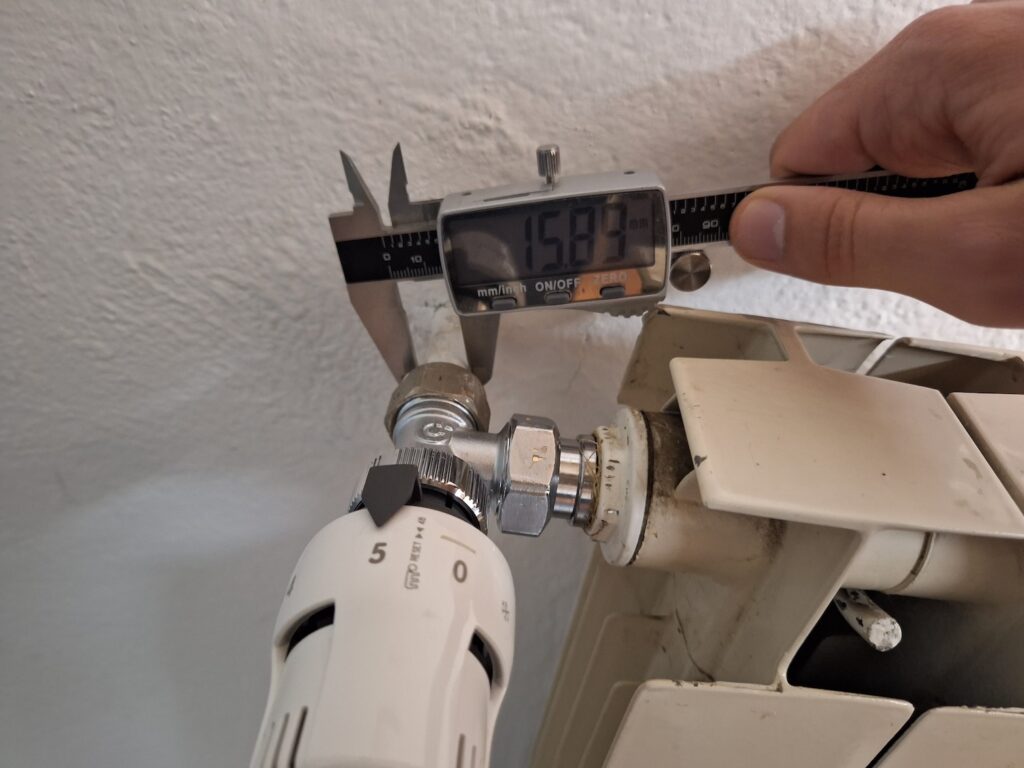
- Diameter of the existing pipe or valve that cannot be thermostated: required to select the size of the new valve.
- Pipe material: While steel pipes have threaded fittings, copper or PVC pipes require different types of fittings known as “compression fittings.”
- Valve configuration: Valves can be square, inline, or H-shaped (also known as single-tube valves).
Once you know the characteristics listed above, you can select the new thermostatic valve from a catalog and, if necessary, the new outlet valve—that is, the valve that allows water to flow out of the fitting.
Sizing and Calibration of Thermostatic Valves
- After sizing the valve, it must be calibrated. Many thermostatic valves come pre-calibrated (also known as pre-set), meaning they feature a graduated scale (different from the one on the thermostatic head) that allows you to select the pressure drops to be associated with the valve.
- In the case of a new system where the layout is known, it is possible to calculate the flow rates and pressure drops for each branch with sufficient precision and, consequently, to pre-adjust the valves on each radiator to balance the system—that is, to ensure optimal fluid distribution in each branch.
- If the system is already in place and the layout is unknown, it is possible to estimate the flow rate through the radiator.
To estimate the flow rate, you must first estimate the radiator’s power under nominal conditions by measuring other parameters related to the radiator. A radiator is characterized by the following parameters:
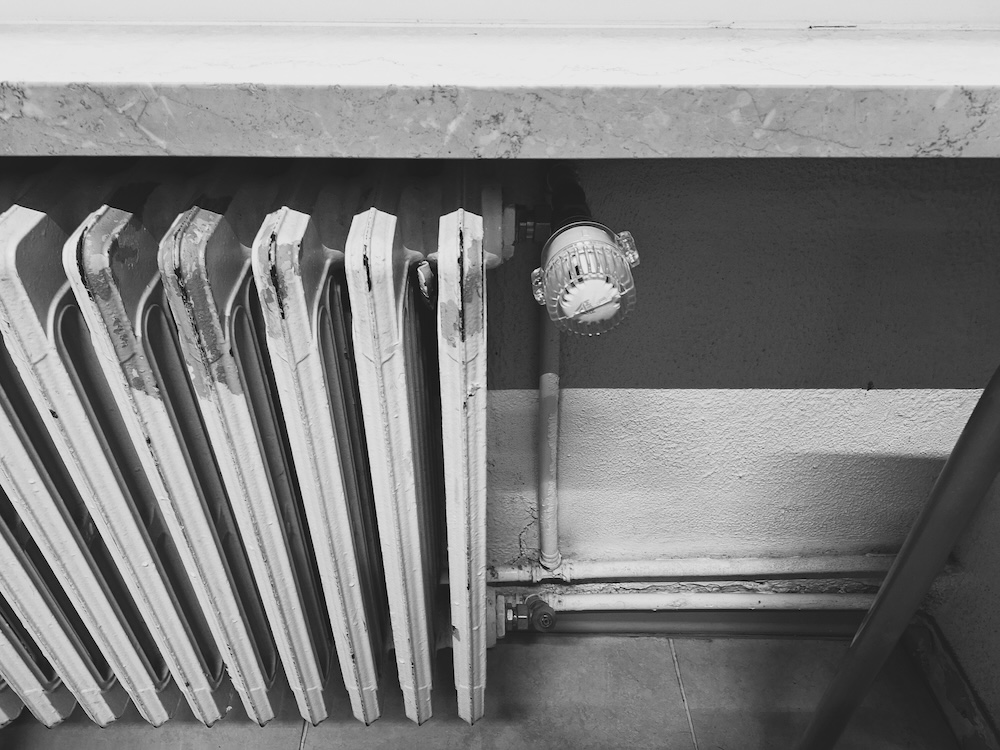
- Material (cast iron, aluminum, or steel)
- Width or number of elements
- Height
- Depth or number of columns
Using this data, it is possible to calculate the radiator’s heat output (UNI EN 442 standard) and then determine the flow rate using the following formula:
G [l/h] = Q [W] / (∆T [°C] × 3600 × 4.184 × 1000)
Where:
- G = flow rate in [l/h]
- Q = power in [W]
- ∆T = temperature difference between the supply and return water in [°C]
According to regulations, a cast-iron radiator system is considered to have a supply temperature of 75°C and a return temperature of 65°C. By using the coefficients specific to each radiator, it is possible to calculate the heat output at different temperatures.
Limitations of Traditional Thermostatic Valves
Traditional thermostatic valves are sensitive to localized heat in their immediate vicinity; if they are covered by curtains or exposed to heat pockets that do not accurately reflect the room temperature, they may detect incorrect readings and adjust improperly.
In these cases, remote sensors can be used. The operating principle remains the same, but the thermostatic control is located about 1.5 m away, allowing it to better detect the room temperature and communicate with the valve via a capillary tube.
Electronic Thermostatic Valves: Smart Room Temperature Control
Electronic thermostatic valves (also known as smart valves) are a different type altogether and offer a much wider range of additional features:
- capability of being controlled remotely
- Scheduling of operating hours
- detection of open windows
- Communication with Other Devices
These features make them particularly well-suited for advanced control of indoor climate regulation and for maximizing the energy efficiency of heating systems.
Conclusions
Proper sizing of thermostatic valves and their correct installation are essential for optimizing energy consumption and improving living comfort. The choice between manual and electronic valves depends on the system’s requirements and the desired level of automation.
If you would like to receive technical advice or assess the energy efficiency of your heating system, contact Enertech Solution: our team of engineers is available to assist you with customized solutions for businesses and public agencies.