



Author: Federico Re Ferrè
Key Points
- The TABS radiant heating systems integrate the piping into the floor slabs, transforming the building into a heating coil.
- The greater inertia compared to underfloor heating results in longer response times, but a greater capacity for heat.
- Low low temperatures of thewater enhance the efficiency of heat pumps and the use of free cooling.
- The TABS systems are particularly suitable for buildings with scheduled and predictable heat loads, such as offices, schools, and healthcare facilities.
- The design is complex and requires ventilation, humidity control and integration into the structure during construction.
TABS radiant systems integrate climate control intothe building’s structure, using the mass of the floor slabs to store and release thermal energy. This high-inertia solution—which is still not widely used in Italy—can provide a high level of comfort and low energy consumption in buildings with predictable thermal loads.
Table of Contents
- What Are TABS Radiant Heating Systems?
- How TABS Radiant Heating Systems Work
- Differences Between TABS Radiant Heating Systems and Radiant Floor Heating
- Energy Efficiency and Operating Temperatures of TABS Systems
- Advantages and Disadvantages of TABS Radiant Heating Systems
- In which buildings is it advisable to install TABS radiant systems?
- Types of TABS Radiant Heating Systems
- Examples of Buildings with TABS Radiant Heating Systems in Europe
- Frequently Asked Questions About TABS Radiant Heating Systems
- TABS Radiant Heating Systems and Predictive Building Control
What Are TABS Radiant Heating Systems?
The radiant radiant for buildings thermoactive, known as TABS from the English Thermo-Active Building Systems are a system of air conditioning that is extremely efficient and widely used in Northern Europe but still not very common in Italy.
How TABS Radiant Heating Systems Work
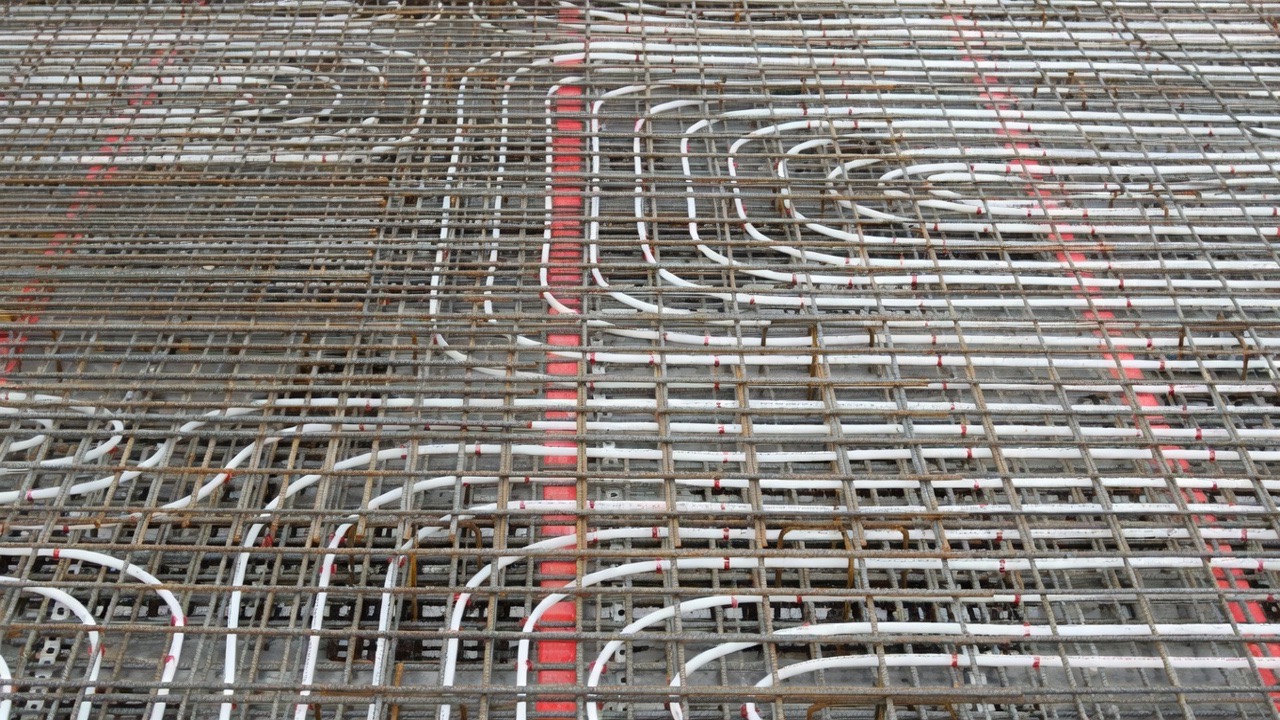
The system TABS provides that in the structural components of thebuilding, usually reinforced concrete floors, are integrated of the pipes that allow for the circulation by hot water or refrigerated depending on the season. The building functions as a thermal battery that stores energy and then releases it gradually, enabling efficient climate control.
Differences Between TABS Radiant Heating Systems and Radiant Floor Heating
I TABS can be very similar to other radiant heating systems such as radiant floor heating , but there is one important difference: while in radiant floor heating the pipes are positioned no more than about ten centimeters below the floor, in TABS radiant heating systems are embedded into the load-bearing structure, much deeper.
This means that the mass to be heated or cool is much greater, agreater inertia results in longer response times but also much more stored energy.
For this reason, when it comes to TABS radiant heating systems , the concept of thermal activation of mass.
Energy Efficiency and Operating Temperatures of TABS Systems
In practice, the radiant systems TABS can start operating much earlier, heating or cooling the building at night when electricity costs significantly less.
In addition, they allow for theadoption by water temperatures even more advantageous compared to a Classic Radiant Floor Heating: In cooling mode, water can be circulated through the 18°C and the 22°C while during warm-up, they are sufficient less by 30°C, usually among the 22°C and the 26°C.
TABS: Low-Temperature-Difference Systems
The TABS systems are therefore systems known as “low-temperature-difference” systems.
I COP of heat pumps therefore benefit greatly from reduced temperature differences in temperature between the water temperature and the outdoor temperature, thereby ensuring low energy consumption.
These small temperature differences mean that it is possible toadoption of free cooling —that is, utilizing fluids from a natural source without them having been heated or cooled by a generator.
The use of water at 18°C for cooling opens the door to the adoption of geothermal solutions or groundwater , so there’s not even a need to cool the water using heat pumps.
Advantages and Disadvantages of TABS Radiant Heating Systems
TABS radiant heating systems offer several advantages in terms of energy efficiency and comfort, but they also have some limitations related to control and design complexity. The following table summarizes the main aspects to consider.
| ADVANTAGES | DISADVANTAGES |
| ✔ Use of energy carriers with a low temperature difference relative to the outside | 🗶 No individual room control |
| ✔ Potential to use the building as thermal storage | 🗶 Limited flexibility in control due to long response times |
| ✔ Free cooling capability | 🗶 Costly and complex design |
| ✔Ability to schedule heating and cooling periods earlier in the day during less expensive time slots thanks to long response times | 🗶 Generally more expensive than traditional systems |
| ✔ High thermal comfort | 🗶 Applicable only to new construction; cannot be implemented in energy-efficiency retrofits |
In which buildings is it advisable to install TABS radiant heating systems?
Due to thehigh inertia and the resulting long response times, the radiant radiant TABS do not are suitable in buildings with rapid and constant fluctuations in foot traffic and occupancy. They are, however, very well suited for uses such as offices, shopping centers, and similar facilities where opening and closing hours are fixed and the Expected thermal loads.
The radiant radiant TABS do not allow for fine adjustment for individual rooms and must also be used in conjunction with ventilation systems to prevent condensation. Other examples of buildings that are great for TABS systems These include school and university buildings, healthcare facilities (which obviously require strict humidity control), and data centers (since they require constant cooling).
Types of TABS Radiant Heating Systems
There are different types of radiant heating systems TABS which differ mainly in terms of the depth where the pipes of the heat transfer fluid: the TABS to core activation call for the pipes to run through the center of the attic while other types are based on pipes more superficial which give the system a greater responsiveness reducing response times by having a lower layer from heat (and therefore less inertia).
Examples of Buildings with TABS Radiant Heating Systems in Europe
Some examples of buildings equipped with radiant heating systems TABS systems in Europe include:
- the White Collar Factory in London: one of the largest facilities in Europe, with over 150 km of piping installed in the floor slabs to reduce carbon emissions by 25%.
- The expansion of the Tate Modern, also in London.
- TheHerman Teirlinck Building in Brussels.
- The Provant from Antwerp: a 25,000 m² office building.
- The SolarWinds of Windhof: a nearly zero-energy building (nZEB) that combines TABS with renewable energy sources.
Frequently Asked Questions About TABS Radiant Heating Systems
How long does it take for a TABS system to cool or heat a building?
Due to thehigh thermal mass involved, the TABS systems have response times in the range of 4–8 hours. For this reason, they are typically activated during the night to cool or heat rooms during the day. This “slowness” is actually an advantage: it allows you to take advantage of lower nighttime electricity rates and ensures exceptional temperature stability in the rooms.
Can TABS radiant heating systems be installed in existing buildings?
Unfortunately, no. I TABS systems require that the pipes be embedded directly into the load-bearing structure in reinforced concrete during the construction phase. This makes them unsuitable for energy retrofit of existing buildings. When renovating, you can opt for traditional radiant floor and ceiling heating systems.
How can you prevent condensation problems with TABS radiant systems?
Surface surface condensation is a real issue in TABS systems, especially in summer cooling mode when surfaces are cooler than the ambient air. For this reason, TABS are always matched with mechanical mechanical (VMC) that carefully regulatehumidity of indoor air.
TABS Radiant Heating Systems and Predictive Building Control
Although TABS are not yet widely used in Italy, they appear to be an interesting solution that highlights the features already present in radiant heating systems , albeit with higher installation costs and greater technical challenges in their implementation.
The advent of new technologies such as theartificial intelligence capable of making the inspection of the buildings Its increasingly predictive nature pairs perfectly with the TABS buildings since having a system to high inertia require a predictive control by high quality.
For more information on TABS radiant heating systems please contact our team Enertech Solution.